
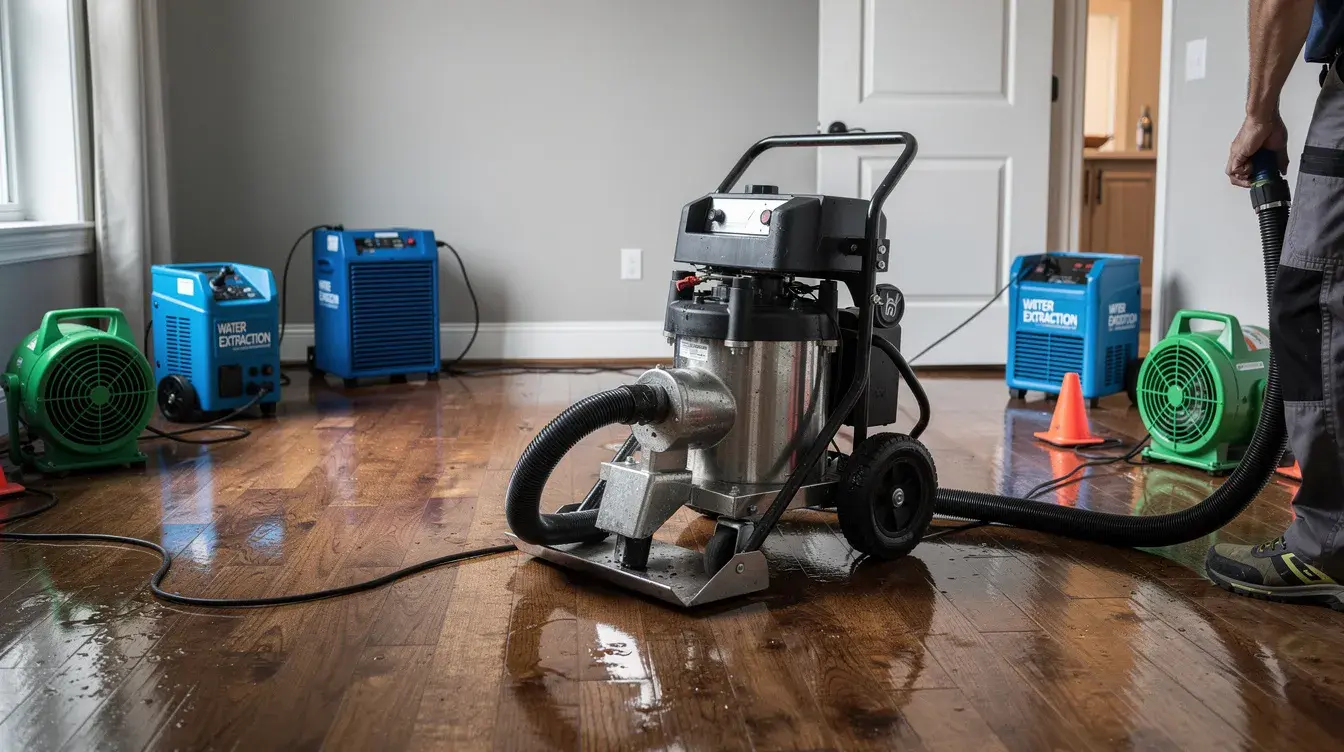
Water on your hardwood floors in Houston can turn from a minor inconvenience into a permanent disaster in just hours. If not addressed quickly, water damage can get worse, leading to more severe and costly repairs. Whether from a burst pipe, appliance failure, or storm flooding, water-damaged wood floors deteriorate rapidly—and surface dryness is deceptive.
This guide explains the causes, signs, and restoration process for hardwood floor water damage in Houston, and is intended for homeowners and business owners seeking fast, effective solutions. It covers everything from identifying early warning signs to understanding restoration methods and prevention strategies, ensuring that Houston property owners can make informed decisions to protect their investment.
Many people are unaware that the condition of swollen hardwood floors can be easily reversed in most cases.
Predator Restoration Inc. provides emergency hardwood floor water damage restoration throughout greater Houston with the speed and expertise needed to save your floors.
Emergency Hardwood Floor Water Damage Help in Houston
Hardwood floors in Houston homes and businesses face constant threats from plumbing failures, appliance leaks, HVAC condensate overflows, and flooding events. When water reaches your floors, water damaged floors can develop quickly—showing signs like soft boards, swelling, cupping, and even mold. Deterioration begins within minutes—and the window for successful restoration closes fast.
Predator Restoration Inc. provides 24/7 emergency hardwood floor water damage response throughout Houston, Willowbrook, Klein, Cypress, Jersey Village, Kingwood, North Houston, and surrounding communities.
- Our technicians dispatch rapidly to your property to remove water, begin structural drying, and stop cupping, buckling, and mold growth before the damage becomes irreversible
- We work efficiently on-site to assess moisture levels, identify hidden water penetration, and implement professional drying protocols
- Our hands-on approach means technicians personally handle water extraction, moisture monitoring, and restoration—not surface-level cleanup
- We provide fast response times, clear communication, and minimal disruption to help homeowners and businesses get back to normal as soon as possible
Call Predator Restoration now at (832) 937-4620 for immediate hardwood floor water damage help in Houston.
Prefer to message us online? Contact Predator Restoration here for urgent hardwood floor restoration service.
How Water Damages Hardwood Floors in Houston Homes & Businesses
Houston’s climate creates a perfect storm for hardwood floor damage. High humidity, frequent severe weather, aging plumbing infrastructure, and common slab-on-grade construction make wood floors in this region especially vulnerable to water intrusion.
When water enters your flooring system, the damage unfolds in predictable but destructive ways:
- Expansion and cupping: Water causes wood cells to swell. Since boards can’t expand sideways (walls and adjacent boards block them) or downward (subfloor prevents it), they expand upward—creating the characteristic “wave” pattern across your room. Cupping occurs when the edges of a board are higher than the center due to water absorption. Wood fiber absorbs water quickly and slowly releases it, which can lead to sagging, warping, or mold contamination.
- Crowning and buckling: Advanced water damage where board centers rise above edges, or boards lift entirely off the subfloor, creating tripping hazards and indicating prolonged moisture saturation. Crowning is when the center of the board rises above the edges, often after water damage. Buckling refers to boards lifting entirely off the subfloor due to prolonged moisture.
- Gapping and discoloration: Boards separate as they contract unevenly, exposing tongue-and-groove joints. Dark stains, water rings, or bleaching indicate mineral deposits or early mold colonization
- Swelling and uneven surfaces: Swollen wood floors indicate that they have absorbed enough water, which can lead to uneven surfaces and water seeping to the subfloor.
- Soft boards: Soft boards are a major sign of water damage, indicating that the floorboards are completely rotten and require replacement. Professional floor repair and hardwood floor repair services are often required to address these issues and restore the floors to their original condition.
Hidden damage is the greater threat. Water trapped under floorboards, within tongue-and-groove joints, and in subflooring systems creates conditions for mold growth, wood rot, and structural deterioration that may not appear for weeks. Water trapped underneath hardwood floors can cause slow rot or mold over time, even if the surface appears dry.
Common Houston-area water damage sources include:
- Slab leaks: Pressurized water lines beneath concrete foundations leak undetected, causing sustained moisture infiltration from below
- HVAC condensate line clogs: Air conditioning systems in Houston’s humid climate generate heavy condensation—clogged drain lines back up onto adjacent flooring
- Appliance failures: Refrigerator ice maker lines, dishwasher connections, and washing machine hoses degrade over time and fail suddenly
- Storm flooding and roof leaks: Houston’s summer storm season brings intense rainfall that penetrates roofing and walls, reaching hardwood floors
Surface dryness is misleading—moisture often remains trapped in the space between boards and the subfloor long after visible water disappears.
Signs Your Hardwood Floors Have Water Damage
After any leak, overflow, or flood event, inspect your hardwood floors immediately. Early detection dramatically improves the chance of saving damaged flooring without full replacement.
Visual warning signs to look for:
- Boards starting to cup (edges higher than center) or crown (center higher than edges)
- Outside edges of boards lifting or separating from adjacent planks
- Uneven or “wavy” appearance when viewed across the room at floor level
- Discoloration, dark staining, or water rings on the wood surface
Tactile and auditory signs:
- Soft or spongy planks when walked on—indicating moisture saturation has compromised wood structure
- Raised nail heads where they were previously flush with the surface
- Creaking or popping sounds that weren’t present before the water incident
Odor and air quality indicators:
- Musty or mildew smell within 24–72 hours, especially along baseboards, under furniture, or beneath area rugs
- These odors signal mold activity and require immediate professional attention
- Mold can develop quickly on wood floors affected by water damage, often indicated by a mildew smell
Time-based risk: Damage that appears mild in the first 24 hours can become permanent warping, mold infestation, and subfloor rot if not mitigated within 48–72 hours. The restoration process becomes significantly more expensive—or impossible—after this window closes.
If you notice any of these symptoms, call Predator Restoration at (832) 937-4620 immediately to maximize the chance of saving your floor. Prompt removal and replacement of damaged materials is essential to prevent further issues.
Floor Water Damage Assessment
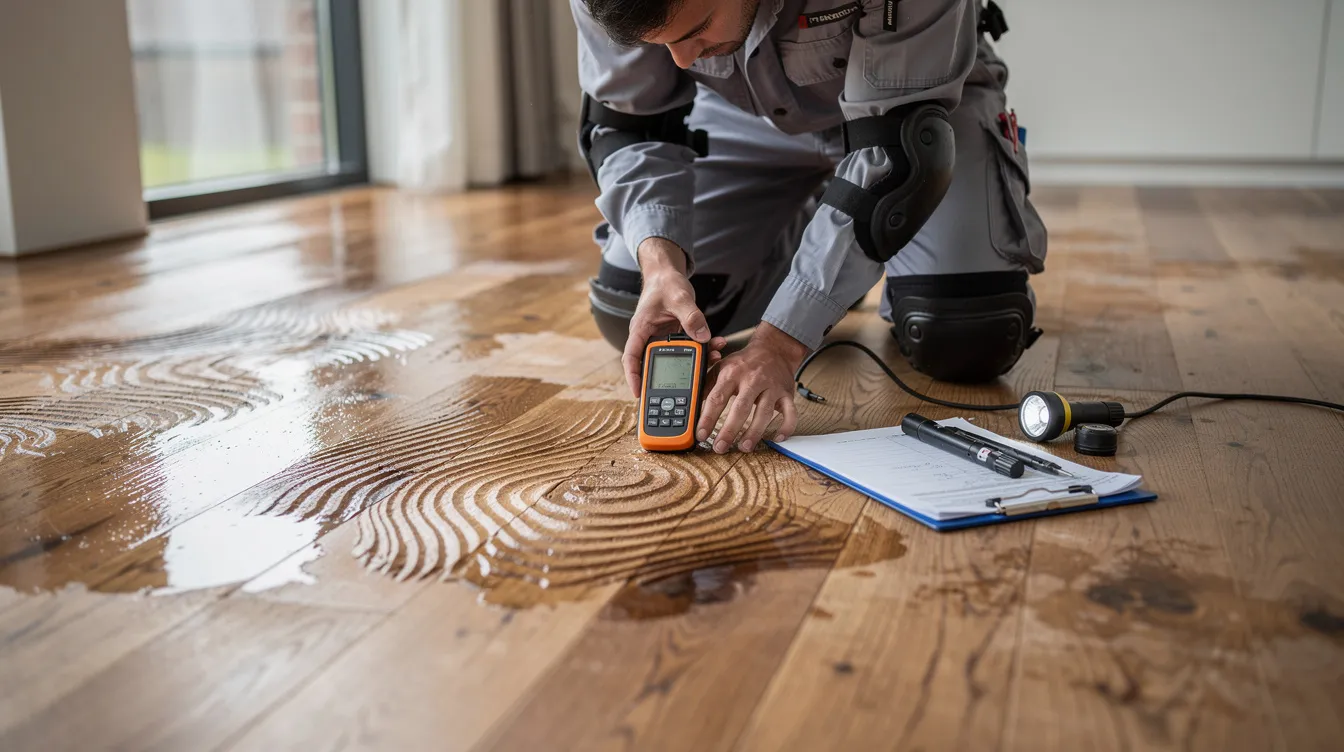
A thorough floor water damage assessment is the foundation of any successful restoration process. When hardwood floors are exposed to water, it’s not always easy to see the full extent of the damage with the naked eye. That’s why water damage restoration experts rely on advanced tools like moisture meters and thermal imaging to detect hidden moisture beneath the surface and within the subfloor. These technologies allow professionals to pinpoint areas where water has seeped into the wood, even if the surface appears dry.
During the assessment, the type of flooring, the source of the water, and how long the floors have been exposed are all carefully evaluated. Hardwood floors are especially sensitive to moisture, and even brief exposure can lead to warping, cupping, or long-term structural issues. By accurately measuring moisture levels and mapping out the affected area, restoration specialists can determine whether water extraction, structural drying, or full replacement of damaged flooring is necessary.
This detailed assessment ensures that every step of the restoration process is tailored to the specific needs of your floors, helping to prevent further damage and restore your hardwood to its original beauty. Whether you’re dealing with a minor leak or significant flooding, a professional floor water damage assessment is essential for effective, lasting restoration.
Our Hardwood Floor Water Damage Restoration Process in Houston
Predator Restoration uses a detailed, hands-on restoration process designed to save hardwood floors whenever possible—and protect your property from further damage when floors cannot be salvaged.
On-site inspection and documentation:
- Moisture readings across the hardwood surface, baseboards, and subfloor using professional moisture meters
- Inspection under transition strips, cabinetry, and areas where water migrates horizontally but remains hidden
- Thermal imaging to identify moisture pockets invisible to the naked eye
- Photo documentation establishing pre-loss condition and damage extent for insurance purposes
Targeted water extraction:
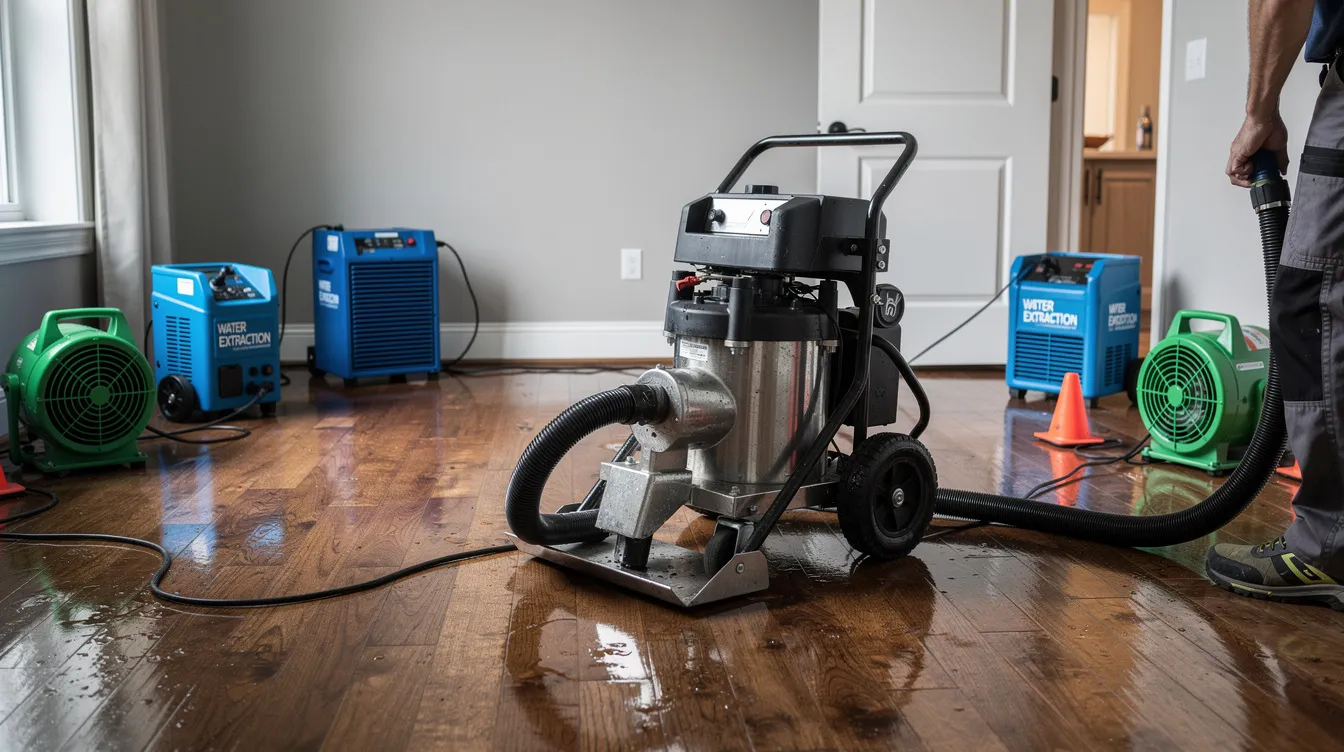
- Professional extraction equipment removes standing water from the floor surface, cracks between boards, and accessible areas beneath boards
- This differs from surface mopping by pulling water from narrow spaces before it penetrates deeper into wood and subfloor
Specialized hardwood drying:
- Floor drying mats create pressure differentials that draw moisture from deep inside the wood structure
- Commercial grade dehumidifiers and air movers accelerate evaporation and maintain proper air circulation
- Negative pressure systems pull moisture from within boards toward extraction equipment rather than allowing passive dissipation
Structural drying and monitoring:
- Daily moisture checks confirm that hardwood and subfloor reach industry-accepted dryness levels (typically 12–14% moisture content)
- Equipment adjustments based on readings, drying curves, and environmental conditions in the affected area
- Extended monitoring prevents premature termination that leaves hidden moisture behind
Cleaning, sanitization, and odor removal:
- Treatment of affected areas to reduce bacteria and contaminants from Category 2–3 water (appliance discharge, sewage, or flood water)
- Professional deodorizing eliminates musty odors that can linger for months if untreated
Final restoration:
- When boards are salvageable, we coordinate sanding and refinishing to restore beautiful hardwood floors to their original appearance
- When boards require replacement, we match wood species and patterns to maintain aesthetic continuity
- Removal and reinstallation of baseboards, trim, and transition pieces included for complete, finished results
Schedule a hardwood floor inspection online or call (832) 937-4620 for 24/7 dispatch throughout greater Houston.
Role of Air Movers and Commercial Grade Dehumidifiers in Drying Hardwood Floors
When it comes to drying hardwood floors after water damage, air movers and commercial grade dehumidifiers are indispensable tools in the restoration process. Air movers work by rapidly circulating air across the affected area, which accelerates the evaporation of moisture trapped in the wood and subfloor. This increased airflow helps to prevent further damage, such as warping or buckling, and reduces the risk of mold growth by keeping the environment dry.
Commercial grade dehumidifiers complement air movers by extracting excess moisture from the air, maintaining optimal humidity levels throughout the drying process. By removing airborne moisture, these powerful machines help protect hardwood floors from discoloration and structural issues that can arise when wood remains damp for too long.
Water damage restoration experts strategically place air movers and dehumidifiers to ensure that every part of the affected area is dried efficiently and thoroughly. This combination not only speeds up the drying process but also minimizes the need for costly refinishing or replacement, helping to restore your floors to their pre-loss condition. With the right equipment and expertise, even severely water-damaged hardwood floors can often be saved, preserving the beauty and value of your property.
Prevention of Mold Growth After Water Damage
Preventing mold growth is a top priority after any water damage incident, especially when it comes to hardwood floors. Mold can develop quickly in moist environments, causing further damage to floors, walls, and even the air quality in your home or business. The key to mold prevention is rapid response—removing standing water and excess moisture as soon as possible through professional water extraction and structural drying.
Water damage restoration experts use a combination of air movers and commercial grade dehumidifiers to dry the affected area efficiently, ensuring that moisture is eliminated from both the surface and deep within the wood. In addition to drying, specialized cleaning solutions and disinfectants are applied to inhibit mold and mildew growth on hardwood floors and surrounding materials.
Regular monitoring of moisture levels is essential, as mold can begin to grow within 24–48 hours if conditions are right. Restoration professionals in Greater Houston are especially vigilant, given the region’s high humidity and frequent flooding from natural disasters. By working with experienced water damage restoration experts, homeowners and businesses can protect their property, prevent further damage, and maintain a safe, healthy environment. Proactive mold prevention not only safeguards your investment in beautiful hardwood floors but also ensures the long-term safety and comfort of your space.
When Hardwood Floors Can Be Saved – And When Replacement Is Needed
Not every water damaged floor requires complete replacement—but quick professional evaluation is critical to determining what can be saved. If water has reached the subfloor or sat too long, replacement might be the only option.
Floors are often salvageable when:
- Water exposure duration is under 24–48 hours
- Water source is clean (Category 1—supply lines, rainwater without contamination)
- Cupping or crowning is mild and wood structure remains sound
- Subfloor saturation is limited and can be dried effectively
- No visible mold growth on boards or subflooring
When full replacement is not necessary, hardwood floor repair and floor repair services can restore your flooring to its original condition. Restoration companies often provide a range of services that can affect the overall cost, including water extraction, drying, and repairs or replacements of damaged flooring. The longer water sits on hardwood floors, the more extensive the damage can become, potentially increasing restoration costs.
Floors typically require partial or full replacement when:
- Severe buckling has lifted boards significantly off the subfloor
- Boards feel soft, spongy, or decayed when tested
- Mold growth is visible on board surfaces or detected underneath
- Water exposure extended beyond 72 hours or involved prolonged saturation from slab leaks
- Category 3 water (sewage, natural disasters flooding) contaminated the wood
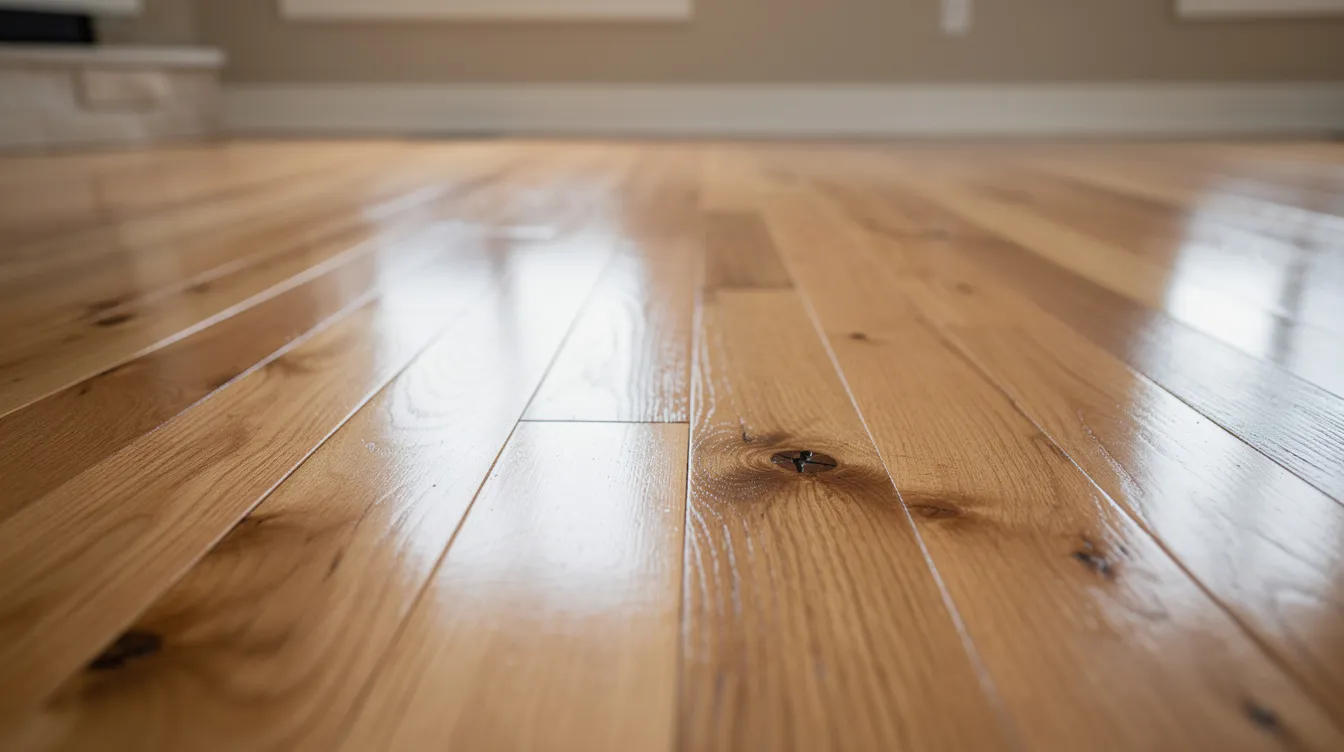
Predator Restoration provides clear, honest assessment and prioritizes saving as much existing hardwood as possible to reduce cost and disruption. We don’t recommend carpet replacement or full floor replacement when damaged flooring can be properly restored.
Our team handles:
- Removal and reinstallation of baseboards, trim, and affected transition pieces
- Coordination of tile or plank replacement in transitional areas
- Matching older floors with appropriate wood species and finishes
Our detailed moisture reports and photo documentation support insurance claims for repair services or replacement in covered water damage losses—helping homeowners and businesses recover efficiently. Factors influencing the cost of restoration include the type of wood, the severity of the water damage, and the necessary equipment and labor involved in the restoration process. Homeowners can receive upfront estimates from restoration companies to understand the potential costs before work begins.
Why Houston Property Owners Choose Predator Restoration for Hardwood Floor Water Damage
Predator Restoration is a Houston-based restoration company serving the greater Houston area with rapid response and meticulous workmanship. Our team understands the specific needs of Houston properties and the urgency water damage demands.
What sets us apart:
- 24/7 availability and rapid dispatch from our Houston base to neighborhoods including Willowbrook, Klein, Cypress, Jersey Village, Kingwood, and North Houston
- On-site, technician-led approach: We don’t just dry the surface—our water damage restoration experts track and eliminate hidden moisture in subfloors, walls, and adjacent rooms to prevent secondary damage
- Full-service restoration capabilities: Water removal, structural drying, mold remediation, odor removal, and rebuild/reconstruction services allow us to handle water damage from emergency response through final repairs
- Local building expertise: Years of experience with Houston’s slab-on-grade homes, townhomes with shared walls, and commercial suites means we understand how water moves through your specific property type
- Industry standards adherence: Certified technicians follow established protocols that maximize hardwood salvage probability and effectively protect against recurrence
Our restoration services cover every aspect of floor water damage—from the moment you discover standing water through renovation and refinishing. We work with your insurance company and provide documentation that strengthens your claim.
Call (832) 937-4620 now for immediate hardwood floor water damage service or request a quote online for scheduled restoration.
Preventing Future Hardwood Floor Water Damage in Houston
After restoration, Predator Restoration helps property owners reduce the risk of repeat hardwood floor water damage through practical prevention strategies suited to Houston’s climate.
Regular inspection and maintenance:
- Check supply lines to refrigerators, ice makers, dishwashers, and washing machines for corrosion, kinks, or leaks
- Replace rubber hoses every 5–10 years or upgrade to braided metal lines
- Schedule routine HVAC condensate drain maintenance—clogs are common in Houston’s humid climate
- Address roof and plumbing leaks immediately rather than delaying for convenience
Humidity control:
- Use dehumidifiers in problem areas to maintain relative humidity below 50–60%
- Ensure proper ventilation in bathrooms, kitchens, and laundry rooms
- Monitor moisture levels in rooms adjacent to the affected area after any water event
Technology solutions:
- Install water leak detection devices near high-risk appliances and water heaters
- Consider smart shutoff valves that automatically close main water supply when sensors detect water
Predator Restoration can provide post-loss moisture checks and advice on resilient materials or installation methods for areas prone to flooding. We help businesses and homeowners build long-term protection strategies that save money and prevent disruption.
If water reaches your hardwood floors again, immediately call (832) 937-4620 or message Predator Restoration online for fast mitigation. Every hour matters when protecting your hardwood investment.