
A slab leak beneath your Houston property can quickly escalate from an invisible drip to a full-blown emergency. When water escapes from pipes buried under your concrete slab foundation, it saturates soil, compromises your home’s structural integrity, threatens your home’s foundation, and creates ideal conditions for mold growth—all while remaining hidden from view.
Slab leaks can lead to foundation damage, mold growth, and unexpectedly high water bills if left unaddressed.
Immediate Help for Slab Leak Water Damage in Houston
Slab leak water damage represents one of the most urgent property emergencies in the greater Houston area. The combination of our region’s expansive clay soil, high humidity, and aging plumbing systems means that a single leak beneath your foundation can cause significant damage to flooring, walls, and structural components within days—sometimes hours.
Predator Restoration Inc. is a 24/7 emergency property restoration company serving Houston and surrounding communities. We specialize in slab leak water damage cleanup, water removal, structural drying, mold remediation, and full reconstruction. While we don’t perform plumbing repair, we work seamlessly with your slab leak plumber to address all the secondary damage after the pipe is fixed. Most insurance policies cover the damage caused by slab leaks, but not the pipe repair itself. We also coordinate with local providers of slab leak repair services and water leak detection to ensure a comprehensive response for your property.
If you see wet floors, warm spots, or unexplained water around your slab, call Predator Restoration immediately at (832) 937-4620 for emergency response.
- Houston’s clay soils amplify foundation instability when saturated
- Mold can begin growing within 24-72 hours in our humid climate
- Acting within 48 hours can reduce overall repair costs by up to 70%
- We serve Houston, Willowbrook, Klein, Cypress, Jersey Village, Kingwood, North Houston, and surrounding areas
Professional leak detection services use advanced technology to locate leaks accurately and minimize damage.
Need urgent slab leak water damage help but can’t call? Message us online now and our team will respond quickly to schedule on-site service.
What Is a Slab Leak and Why It’s So Destructive in Houston
A slab leak is a rupture or pinhole failure in water or sewer line pipes embedded within or beneath a concrete foundation. In residential settings, these slabs are typically 4-6 inches thick, while commercial warehouses and retail centers may have slabs measuring 8-12 inches. The pipes carrying water at 50-80 psi—often copper pipes prone to pipe corrosion in acidic soils or galvanized steel susceptible to internal scaling—can develop pinhole leaks or larger failures that release continuous water flows undetected for weeks.
Houston’s geology makes slab leaks particularly destructive. Our Beaumont Clay features high-plasticity soil with expansion indices exceeding 100, meaning it swells 20-30% when saturated and shrinks equivalently during drought. This soil movement exerts tremendous pressure on buried pipes and slab foundations, inducing micro-stresses that lead to pipe failures over time.
When water leaks occur, the progression causes:
- Sub-slab saturation: Water erodes foundation support, creating voids up to 12 inches deep
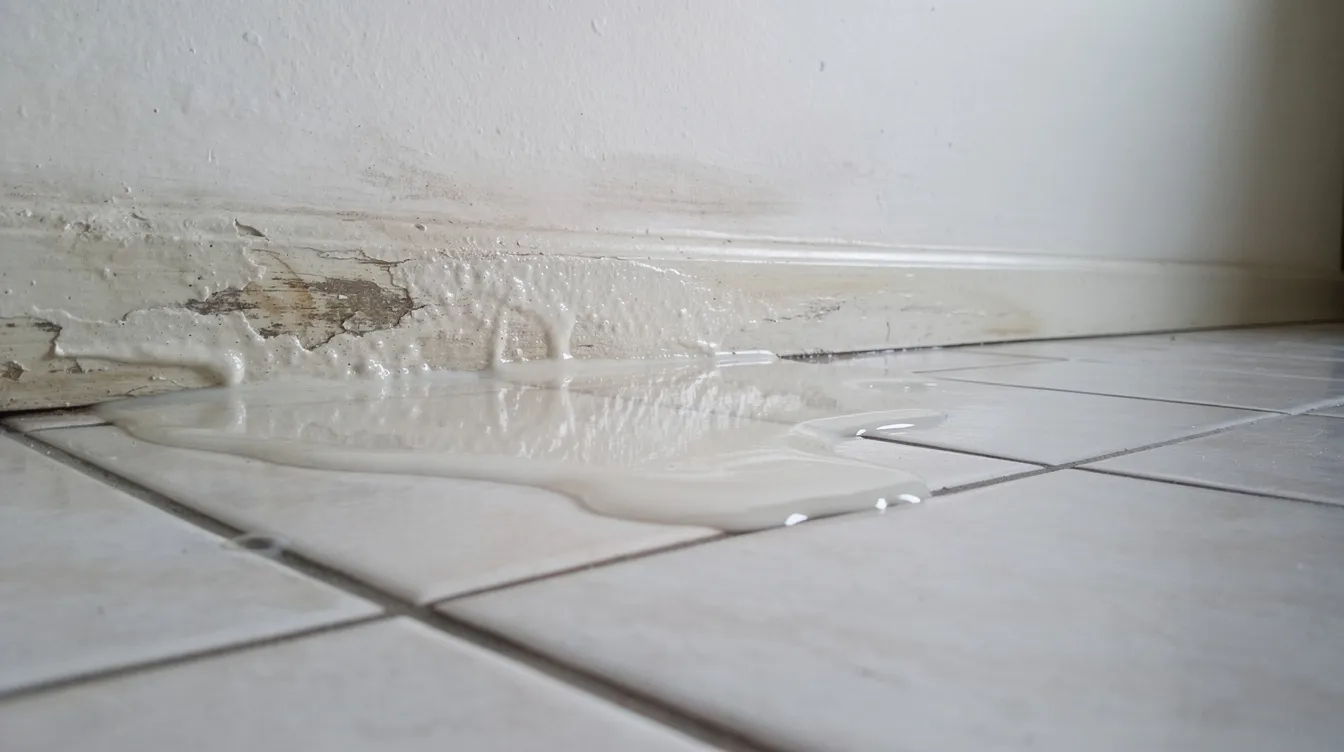
- Moisture migration: Water wicks upward through capillary action into flooring, walls, and baseboards
- Foundation stress: Differential soil pressure causes slab cracks and structural shifting
- Surface damage: Efflorescence, delamination, and warped materials appear inside the property
Historical events like Hurricane Harvey in 2017 and the 2021 winter freeze caused widespread pipe failures across Houston, with the Texas Department of Insurance reporting over 10,000 water damage claims in the months following the freeze alone.
The distinction is important: Experienced plumbers handle slab leak detection and repair slab leaks using acoustic detection, rerouting with PEX, or slab sawing for access. Predator Restoration focuses on water extraction, structural drying to prevent mold growth, antimicrobial treatments, and full reconstruction of damaged areas.
Causes of Slab Leaks in Houston Homes & Businesses
Slab leaks in Houston are often the result of a combination of environmental and plumbing system factors unique to the region. One of the primary culprits is the city’s expansive clay soil, which is notorious for shifting and settling as moisture levels change. This constant movement places stress on the pipes running beneath your concrete slab foundation, eventually leading to cracks, pinhole leaks, or even complete pipe failures.
Pipe corrosion is another significant contributor to slab leaks in Houston homes and businesses. Over time, the chemistry of the soil and water quality can cause pipes—especially older copper or galvanized lines—to deteriorate from the inside out. This corrosion weakens the pipe walls, making them more susceptible to leaks that can go undetected until significant damage has occurred.
High water pressure is also a common issue in Houston’s plumbing systems. When water pressure exceeds recommended levels, it puts additional strain on pipes, joints, and fittings beneath the slab. This ongoing stress can accelerate wear and tear, increasing the likelihood of leaks developing over time.
Regular leak detection and repair services are essential for identifying these vulnerabilities before they escalate. By proactively monitoring your plumbing system and addressing minor leaks or pressure issues early, you can help prevent significant damage to your home’s foundation and avoid the costly repairs associated with slab leaks.
Common Signs of Slab Leak Water Damage in Houston Homes & Businesses
Slab leaks often remain hidden for weeks to months due to concrete’s thermal mass masking symptoms. However, knowing the signs of a slab leak and what to look for can help you spot water damage before it becomes severe. Recognizing these common signs early can save you from costly repairs and significant damage to your property.
Warning signs in Houston properties include:
- Warm or damp spots on floors: Hot water line leaks can elevate surface temperatures 10-20°F, detectable by touch on tile or exposed concrete—especially near kitchens, bathrooms, and utility rooms
- Buckling or cupping hardwood: Wood floors with moisture content above 12% can experience 5-15% dimensional change, causing visible warping in living rooms and hallways
- Sudden spike in water bill: Unexplained increases of 20-100%—sometimes 10,000-30,000 gallon monthly anomalies—are common indicators in Cypress, Kingwood, Jersey Village, and North Houston neighborhoods
- Musty odors: Microbial volatile organic compounds develop in 70-90% humidity conditions, creating that telltale smell especially after storms or when HVAC runs constantly
- Hairline cracks in drywall: Cracks measuring 0.5-2mm appearing around door frames often coincide with soft or damp flooring from hydrostatic uplift
- Sound of running water: Hearing phantom water sounds when no fixtures are in use suggests a hidden water leak of 1-2 gallons per minute
If you notice two or more of these signs, call Predator Restoration at (832) 937-4620 for a same-day moisture and damage assessment.
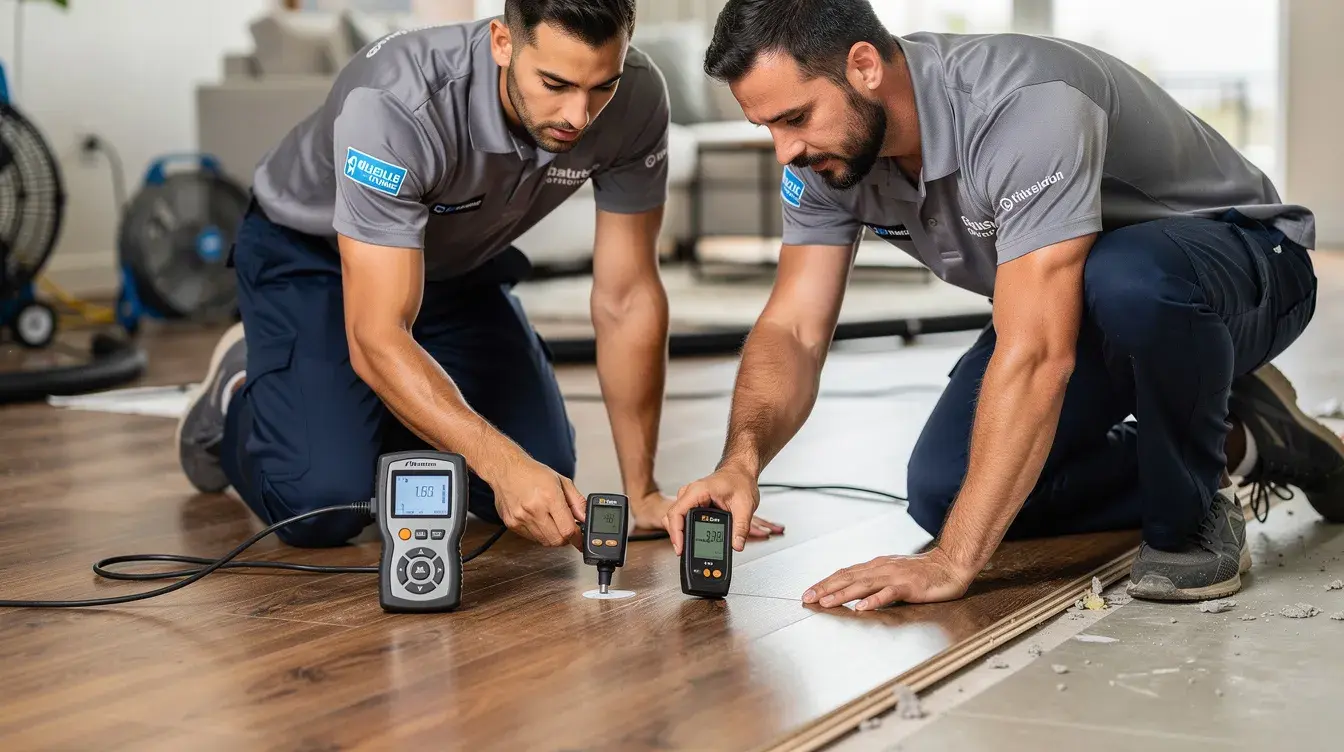
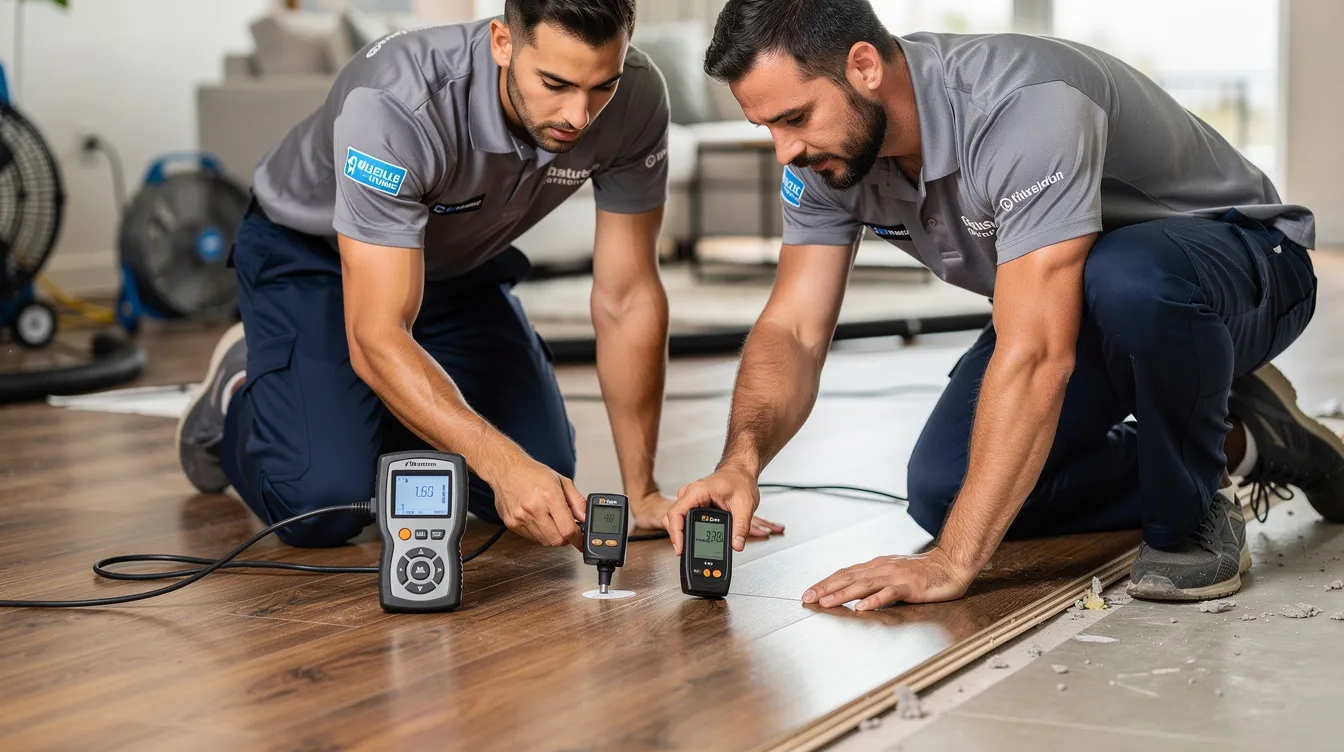
Commercial properties in the Houston area—restaurants, offices, retail suites—may show different symptoms including warped baseboards, stained concrete, lifted vinyl plank flooring, or moldy odors in restrooms and mechanical rooms. Our experienced technicians use pinless meters, thermal imaging cameras, and borescope inspections to locate the exact location of moisture intrusion.
How Slab Leaks Lead to Major Water Damage, Mold & Structural Problems
Slab leaks never improve on their own. In Houston’s climate—with average temperatures of 75-95°F and relative humidity often reaching 60-90%—water damage escalates rapidly through predictable stages. Understanding this progression explains why immediate attention from professionals matters.
Stage 1 (0-48 hours): Saturation of Slab and Flooring
Concrete with 5-15% porosity absorbs 1-3% of its weight in water. Moisture becomes trapped under tile, LVP, and carpet pads. Even small leaks saturate 20-40 square feet per gallon through wicking action.
Stage 2 (24-72 hours): Humidity Spike and Mold Growth
Houston’s warm, humid conditions provide ideal mold habitat. At 65% relative humidity, Aspergillus and Stachybotrys colonies can begin forming, doubling every 24 hours according to EPA studies. Post-Harvey, approximately 25% of affected Houston homes developed mold infestations.
Stage 3 (3-14 days): Structural Deterioration
Wood rot attacks bottom plates, reducing structural strength by 50% at 30% moisture content. Soil washout creates cavities of 1-3 cubic feet, undermining foundation piers. Slab cracks widen to 0.25-1 inch.
Stage 4 (Weeks and Beyond): Indoor Air Quality Issues
Airborne mold spore counts can reach 1,000-10,000 spores per cubic meter, exacerbating respiratory conditions. The CDC links elevated indoor spore counts to increased emergency room visits among vulnerable populations.
Predator Restoration’s hands-on inspections are designed to find hidden secondary damage that surface-level “dry-out” companies miss. We routinely discover:
- Mold in wall insulation behind intact drywall
- Delaminated engineered wood and LVP
- Microbial growth behind baseboards and cabinetry
- Corrosion of fasteners on bottom tracks of metal framing
Case studies from the 2021 freeze show average escalations of $20,000 when thorough mitigation wasn’t performed initially.
Slab Leak Detection Services in Houston
Detecting a slab leak early is crucial for minimizing property damage and repair costs. In Houston, professional slab leak detection services utilize state-of-the-art technology to pinpoint leaks hidden beneath your concrete slab foundation with minimal disruption to your home or business.
Experienced plumbers employ advanced tools such as acoustic listening devices, which can pick up the subtle sounds of water escaping from pipes, and thermal imaging cameras that reveal temperature differences caused by leaking water. Pressure testing is also used to identify drops in water pressure that may indicate a hidden leak. These non-invasive methods allow technicians to detect slab leaks and determine their exact location without unnecessary demolition or guesswork.
Once the leak location is identified, detailed documentation is provided, outlining the severity and precise position of the problem. This information empowers homeowners to make informed decisions about the most effective repair method, whether it’s a spot repair, reroute, or full pipe replacement.
Early leak detection and repair not only help prevent mold growth and water waste but also protect your home’s foundation from costly repairs down the line. By choosing experienced plumbers who use the latest leak detection services and technology, you can ensure your plumbing system remains in top condition while minimizing disruption to your daily life.
Soil Movement and Slab Leaks: Houston’s Unique Risk Factors
Houston’s expansive clay soil presents a unique challenge for homeowners when it comes to slab leaks. This type of soil is highly reactive to changes in moisture and temperature, expanding significantly when wet and contracting during dry spells. As the clay soil beneath your concrete slab foundation shifts, it can exert tremendous pressure on your plumbing system, leading to pipe corrosion, joint failures, and ultimately, slab leaks.
The city’s climate further amplifies this risk. Hot summers and mild winters cause frequent cycles of soil expansion and contraction, which can gradually weaken pipes and create hidden vulnerabilities. Over time, even minor soil movement can result in costly repairs if not addressed promptly.
Regular maintenance and monitoring of your plumbing system are essential in Houston’s environment. By staying vigilant for warning signs of soil movement—such as new cracks in walls or floors, or unexplained changes in water pressure—you can catch potential issues before they escalate. Proactive leak detection and timely repairs help safeguard your home’s structural integrity and prevent the significant damage that slab leaks can cause.
Understanding the relationship between Houston’s clay soil, soil movement, and slab leaks empowers homeowners to take preventive action, reducing the risk of unexpected plumbing failures and protecting their investment for years to come.
Our Slab Leak Water Damage Restoration Process in Houston
Predator Restoration employs an IICRC-compliant, technician-led process optimized for Houston’s climate, building types, and slab construction. Slab leak repair often begins with professional slab leak detection, which requires specialized tools and experience to accurately locate leaks concealed beneath concrete. Our approach emphasizes minimizing disruption while ensuring thorough mitigation—not surface-level repairs that leave hidden moisture behind.
Emergency Response & Safety
Our 24/7 dispatch achieves on-site arrival typically within 60-90 minutes across the Houston metro. Technicians immediately verify power safety, assess trip hazards, and identify contamination risks including Category 2 or Category 3 water from drain cleaning backups or sewer line cross-contamination.
Moisture & Damage Assessment
Using state of the art moisture meters (±0.5% accuracy), FLIR thermal imaging cameras capable of detecting temperature differences from leaks as small as 0.05 gallons, and borescope inspections, we create detailed moisture maps. This advanced technology helps distinguish between plumbing leaks, rain intrusion, and groundwater issues.
Water Extraction & Removal
High-capacity truck-mount extractors capable of removing 100-500 gallons per minute eliminate 90% of standing water. We use specialized injectidry systems to remove trapped water from under floating floors and in low spots along the slab edge—areas where water waste accumulates unseen.
Controlled Demolition (If Needed)
We carefully remove non-salvageable materials—baseboards, lower drywall (typically 12-24 inches), damaged cabinets, delaminated flooring—while preserving 70-80% of structures. This approach prevents unnecessary demolition while exposing wet areas for proper drying.
Structural Drying & Dehumidification
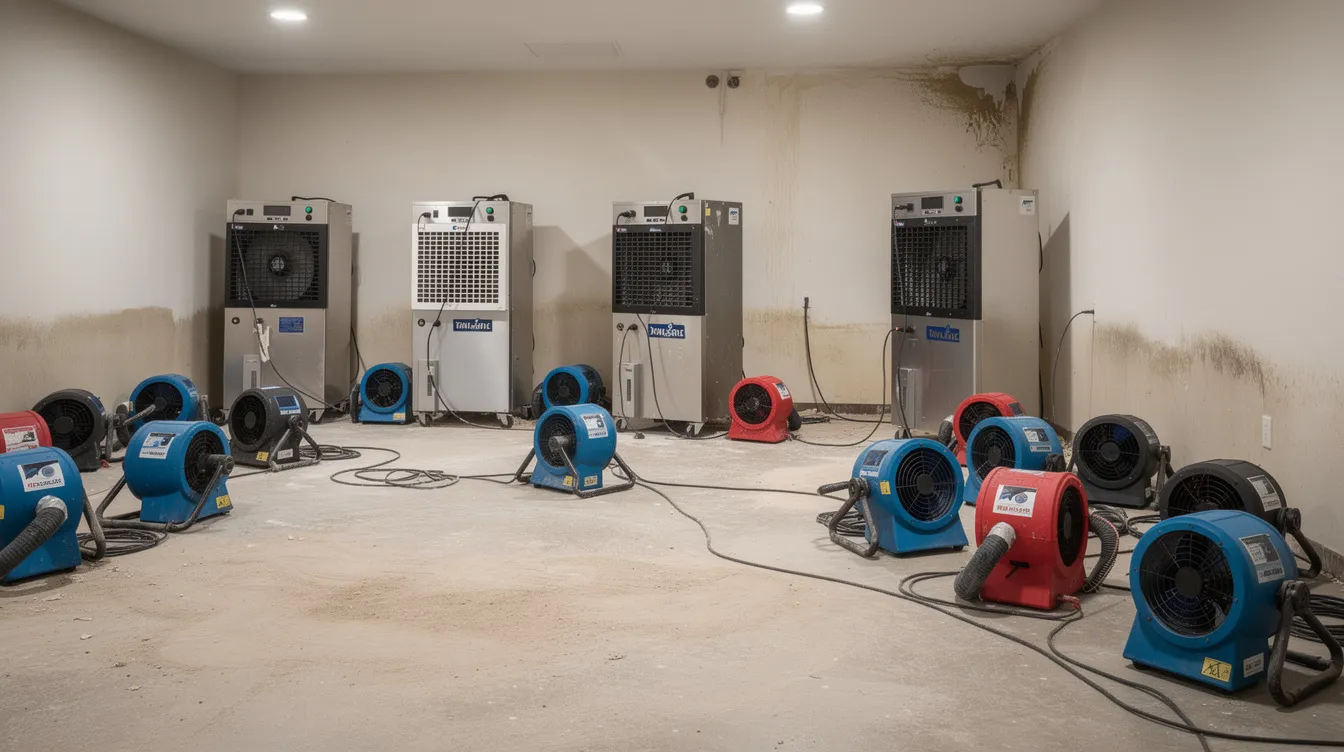
Commercial air movers (2,500 CFM each) and desiccant dehumidifiers (125 pints per day at 80°F/60% RH) work continuously. We monitor moisture levels in concrete, framing, and finishes until reaching dry standards—below 12% moisture content in concrete and 15% in wood.
Cleaning, Sanitizing & Odor Removal
EPA-registered antimicrobials with 99.9% kill rates treat affected surfaces. HEPA vacuums capture particles down to 0.3 microns at 99.97% efficiency. Advanced odor removal methods including ozone and thermal fogging eliminate persistent VOCs.
Mold Remediation (If Present)
When mold is identified, we transition to full remediation protocol compliant with Texas regulations and IICRC S520 standards. This includes negative air machines (500 CFM), 6-mil containment barriers, and post-clearance air sampling confirming less than 500 spores per cubic meter.
Rebuild & Reconstruction
After drying, our reconstruction services restore your property to pre-loss condition or better. This includes moisture-resistant Type X drywall, professional paint matching, flooring replacement, and trim and cabinetry repairs.
Ready to schedule an on-site inspection? Call (832) 937-4620 now or request service through our online form.
Coordinating With Plumbers & Handling Insurance for Slab Leak Damage
Understanding the relationship between plumbing repair and restoration services helps property owners navigate slab leak recovery efficiently. Plumbers specialize in leak detection and repair—locating problems using ultrasonic detectors with sensitivity to 0.5 gpm at 20 feet, then executing repairs through reroutes, slab breaches, or full repipes ranging from $5,000-$15,000.
Predator Restoration intervenes after the plumbing repair is complete, handling everything above and around the slab. We regularly coordinate with Houston-area plumbers after they complete:
- Slab leak detection services: Acoustic and electronic methods to pinpoint leak location
- Reroutes: New pipe runs through walls, attic spaces, or overhead areas
- Direct access repairs: Spot repair through the slab using cores of 12-24 inches
- Pipe replacement: Full repipe with modern materials like PEX
Our insurance documentation includes:
- Detailed moisture maps using psychrometric data for dew point control
- 4K photo logs documenting all damage
- Daily drying progression graphs showing RH and moisture content
- Itemized Xactimate estimates using insurance-standard line items
- Clear explanations of necessary mitigation and rebuild steps for adjusters
We provide detailed documentation, including technical reports and photos, to support homeowners’ insurance claims for slab leak repairs. Detailed documentation and technical reports can support homeowners’ insurance claims for slab leak repairs. Homeowners should document the damage caused by slab leaks to support their insurance claims. Detailed documentation, including photos and technical reports, can help maximize reimbursement for covered slab leak repairs.
Coverage typically extends to sudden water damage—approximately 80% of policies according to the Insurance Institute. However, gradual wear may be excluded. Houston freeze claims averaged $25,000 in payouts following the 2021 event. We assist 500+ annual claims across soil-shift hotspots like Kingwood and help serve homeowners through the documentation process.
We encourage policyholders to review their specific policy and involve their insurance carrier early. Our team provides detailed documentation that supports legitimate claims while maintaining transparent pricing throughout the process.
Why Choose Predator Restoration for Slab Leak Water Damage in Houston
Unlike remote-monitored “dry-out” operations that leave 30-50% of hidden moisture behind (per post-job audits), Predator Restoration’s on-site technicians personally probe wall cavities, inspect behind cabinetry, and verify drying at every step. This hands-on approach achieves 98% secondary damage prevention.
What sets us apart:
| Feature | Predator Restoration Approach |
|---|---|
| Response Time | 24/7 emergency dispatch, typically on-site within 60-90 minutes |
| Service Area | Houston, Willowbrook, Klein, Cypress, Jersey Village, Kingwood, North Houston |
| Local Expertise | Deep familiarity with clay soil issues, local slab construction, and recurring problems in both older and newer subdivisions |
| Full-Scope Services | Water extraction, structural drying, mold remediation, odor removal, sewage cleanup, water heater installation, repair, and maintenance, and complete rebuild/reconstruction |
| Inspection Depth | Finding hidden moisture in walls, under cabinetry, and along slab edges—not just visible wet spots |
| Property Types | Single-family homes, multifamily units, medical offices, retail spaces, commercial buildings |
| Communication | Clear findings explanation, step-by-step plans, and regular updates until full restoration |
Our experienced technicians average 10+ years in the field and hold ASE certifications. We understand Houston-specific challenges including extended drying requirements (7-14 days in high-humidity conditions) and how minor leaks in aging plumbing systems can quickly escalate.
Preventive measures can significantly reduce the risk of slab leaks and extend the life of plumbing pipes.
Don’t let a slab leak cause further damage to your property. Call Predator Restoration at (832) 937-4620 now for immediate help, or request a rapid response online.
Preventing Future Slab Leak Water Damage in Greater Houston
After dealing with a slab leak—or to avoid one entirely—Houston homeowners and property managers can take practical steps to protect their properties. Prevention combines plumbing services, foundation maintenance, and early detection.
Practical prevention measures include:
- Regulate water pressure: Work with a licensed plumber to install or recalibrate a pressure-reducing valve, keeping pressure between 55-75 psi. This can reduce pipe failure risk by 50% according to ASPE data.
- Schedule periodic leak detection: Annual ultrasonic scans ($300-500) catch hidden leaks before they cause property damage, especially important in older Houston neighborhoods with aging copper or galvanized lines 40+ years old.
- Maintain soil moisture consistency: Use controlled irrigation with soaker hoses to maintain 10-15% volumetric water content around your home’s foundation, reducing extreme expansion and contraction of clay soil.
- Address plumbing issues early: Don’t ignore intermittent warm spots, dripping faucets, small cracks near the foundation, or occasional water bill spikes—these often indicate developing problems that need immediate attention.
- Verify complete drying after incidents: After any water leak repair, ensure professional drying reached proper moisture standards. Hidden moisture pockets lead to mold and future structural damage.
- Schedule slab leak repair services: Arrange for regular inspections and maintenance from professional slab leak repair services to detect and address potential issues before they escalate.
Consider pipe condition assessments for properties with copper pipes over 40 years old, which have approximately 70% failure rates. Many Houston homeowners are choosing PEX retrofits for pipe replacement as a long-term solution.
When a slab leak is detected, repair options include pipe rerouting, which bypasses damaged underground pipes with new water lines to avoid foundation demolition. Complete repiping may be necessary if multiple failures indicate system-wide deterioration, requiring full replacement of under-slab plumbing. For minor leaks, epoxy pipe lining offers a trenchless method to seal leaks inside existing pipes without extensive excavation.
Non-invasive detection methods are essential for accurately locating under-slab leaks. These include acoustic leak detection, which uses sensitive listening equipment to pinpoint water movement beneath a concrete slab; thermal imaging technology, which identifies temperature variations caused by hot or cold water leaks beneath flooring; and pressure testing, which isolates affected pipe sections to confirm the presence and severity of a leak. Electronic detection equipment enables quick and accurate leak location without unnecessary damage to floors, while water meter testing checks for continuous water flow when fixtures are off, indicating active underground leaks.
Predator Restoration offers moisture audits ($250-500) for property owners who want verification that previous mitigation was thorough—or who want baseline documentation of their property’s current condition.
24/7 Slab Leak Water Damage Cleanup in Houston – Call Now
When slab leak water damage strikes your Houston property, fast action within the first 24-48 hours dramatically reduces mold growth, structural damage, and overall repair costs. Studies show early intervention can cut total restoration expenses by 60% or more while achieving 95% mold prevention.
Predator Restoration provides emergency response day and night for slab leak water damage throughout the greater Houston area. Our full-scope services include water removal, structural drying, mold remediation, odor removal, and complete rebuild—all performed by experienced technicians who understand Houston’s unique challenges.
Call Predator Restoration now at (832) 937-4620 for immediate slab leak water damage help in Houston and nearby communities.
Need fast help but can’t call? Message us online now and our team will respond quickly to schedule on-site service.
Don’t let a hidden water leak beneath your concrete slab foundation become a major restoration project. Whether you’re in Sugar Land, North Houston, Kingwood, or anywhere across the metro area, our technicians are ready to respond 24/7 with the equipment, expertise, and dedication to restore your property completely.