Water Damage Behind Walls Houston
Hidden water damage behind walls is one of the most destructive—and most overlooked—problems facing Houston properties. This guide is for Houston homeowners and business owners concerned about hidden water damage behind walls in Houston. Addressing hidden water damage quickly is crucial to prevent costly repairs and health risks. In our humid, storm-prone climate, Houston’s climate requires specialized drying techniques and equipment to address the region’s persistent humidity, as trapped moisture spreads fast and often goes unnoticed until mold has taken hold or structural materials have started to deteriorate.
Predator Restoration Inc. specializes in finding and fixing water damage behind walls throughout greater Houston. We don’t do surface-level drying. Our technicians personally respond to properties, identify hidden moisture, and perform complete mitigation and restoration.
Immediate Help for Hidden Water Damage Behind Walls in Houston
Water trapped inside your walls is an emergency. In Houston’s climate, mold growth can begin within 24–48 hours, and structural damage accelerates with every day that passes.
If you suspect water damage behind your walls, take action now:
- Call Predator Restoration 24/7 at (832) 937-4620 for immediate inspection and mitigation
- Message us online for fast response anywhere in the greater Houston area
- We serve Houston, Willowbrook, Klein, Cypress, Jersey Village, Kingwood, North Houston, and surrounding communities
Don’t wait for visible damage to appear. Hidden leaks cause the most expensive repairs because they’re allowed to spread unchecked. Our fast response teams are ready around the clock to locate the source, assess the full extent, and begin professional drying before secondary damage sets in.
Transitioning from immediate help, it’s important to understand what water damage behind walls is and why it poses such a serious risk in Houston.
What Is Water Damage Behind Walls – And Why It’s So Serious in Houston?
Water damage behind walls refers to moisture that becomes trapped within wall cavities—saturating drywall, insulation, wooden framing studs, and even electrical components—without showing obvious signs on the surface. Because this water evaporates slowly in enclosed spaces, it creates ideal conditions for hidden deterioration.
Water damage can cause significant structural damage by spreading through absorbent materials like wood and drywall. Moisture creates ideal conditions for mold growth within 24 to 48 hours.
In Houston TX, this problem escalates rapidly. Our subtropical climate features average annual rainfall exceeding 50 inches. Relative humidity often surpasses 70–90% from April through October, and frequent tropical storms are common.
High ambient humidity prevents natural drying, allowing moisture content in building materials to remain dangerously elevated for extended periods.
Typical sources of hidden wall moisture in Houston include:
- Slow plumbing leaks inside walls (shower valves, supply lines, drain connections)
- Roof leaks and window intrusion from wind-driven rain
- AC condensate line leaks draining into wall cavities
- Slab leaks wicking moisture up into interior walls
- Previous flooding (like Hurricane Harvey) that was never dried correctly
Why hidden water damage is dangerous:
- Excess water can quickly cause significant structural damage by spreading through absorbent materials like wood and drywall.
- Structural weakening—wood framing can lose up to 50% of its strength after prolonged moisture exposure
- Mold growth begins within 24–48 hours at Houston’s typical temperatures and humidity levels
- Electrical hazards from water contacting wiring and outlets behind finishes
- Musty odors from decaying organic materials that permeate the home or business
Predator Restoration’s approach is hands-on and on-site. We focus on locating hidden moisture behind finishes and removing it completely—not just drying visible surfaces. This meticulous process prevents secondary damage like microbial growth, structural deterioration, and lingering odors.
Now that you understand the seriousness of hidden water damage, let’s explore the common signs that may indicate a problem behind your walls.
Common Signs of Water Damage Behind Walls in Houston Homes & Businesses
Hidden water often reveals itself through subtle signs before catastrophic damage appears. Houston homeowners and businesses affected by concealed leaks frequently notice these warning signs first:
Visual clues:
- Bubbling, blistering, or peeling paint (drywall paper delaminates at high moisture content)
- Soft or spongy drywall when you press on it
- Warped or buckling baseboards separating from floors
- Separated caulk around tubs, showers, or windows
- Recurring cracks that reappear after patching
- Yellow-brown staining from tannins in wet wood or rust from metal components
- White powdery deposits (efflorescence) on masonry walls
Sensory clues:
- Musty or “wet cardboard” odor, especially near bathrooms, kitchens, or AC closets
- Cooler or damp spots on wall surfaces
- Sudden increases in indoor humidity you can feel
Practical indicators:
- Unexplained sudden spike in your water bill (a 20–50% increase can signal slow leaks)
- Intermittent wet carpet edges along walls
- Hardwood flooring cupping or buckling next to interior partitions
Houston’s air conditioning can mask thermal anomalies, but it can’t hide moisture. Odors and stains are often the first clues that water is trapped behind your walls.
Stop DIY patching and call Predator Restoration at (832) 937-4620 as soon as these signs appear. Early detection prevents costly repairs and extensive structural damage.
Understanding these signs can help you identify problems early. Next, let’s look at what causes water damage behind walls in Houston.
Typical Causes of Water Damage Behind Walls in the Houston Area: Plumbing Leaks and More
Houston’s building styles, aging infrastructure, and weather patterns create unique conditions for hidden wall moisture. Understanding the common causes helps property owners respond quickly and target the right solutions.
Plumbing issues:
- Pinhole corrosion in copper supply lines (Houston’s moderately hard water accelerates pipe corrosion)
- Failed PEX fittings at crimp rings
- Leaking pipes and supply lines to upstairs bathrooms
- Slow leaks around shower valves concealed inside wall cavities
- Hidden pipe bursts from aging polybutylene pipes in 1980s–1990s homes (common in Jersey Village and Willowbrook)
Water leaks can also occur due to improperly installed or broken pipes, shifting soil, and pipe corrosion. When repairing plumbing issues, joint sealing is a crucial part of water leak repair services to restore plumbing integrity and prevent future leaks.
AC and HVAC problems:
- Clogged primary condensate drains in attics (algae buildup blocks lines, causing overflow)
- Missing or rusted secondary drain pans
- Condensate leaks running down wall cavities from attic units—especially common in summer throughout North Houston and Cypress
Roof and exterior intrusion:
- Roof flashing failures around chimneys, vents, and skylights
- Stucco cracks in 1980s–2000s construction allowing water migration
- Poorly sealed windows permitting water intrusion during heavy downpours
- Wind-driven rain from Gulf storms forcing moisture into exterior walls at 40–60 mph gusts
Slab and foundation wicking:
- Slab leaks beneath tile or hardwood near interior walls
- Moisture wicking up into drywall through capillary action in neighborhoods with expansive clay soils
- Underground pipes cracking as foundations shift (common in Klein and older Cypress neighborhoods)
Storm and flood events:
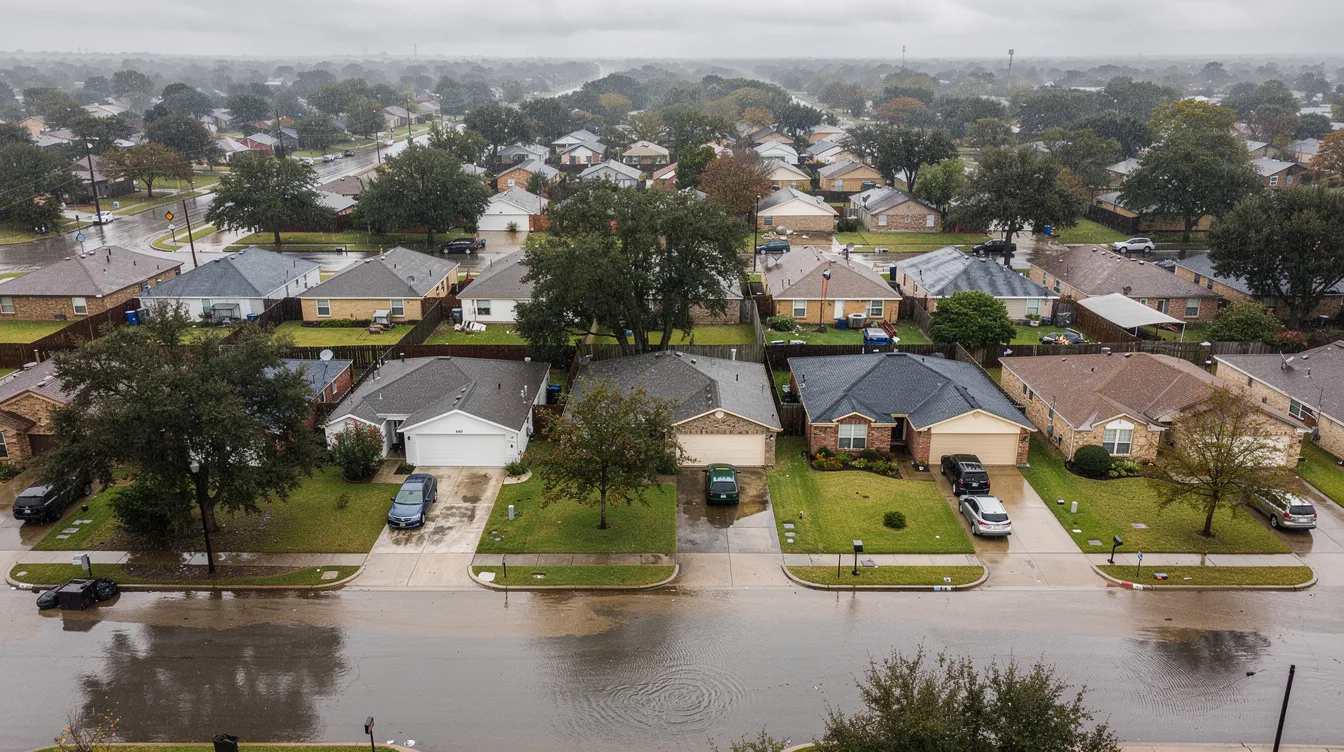
- Prior storm flooding from Hurricane Harvey (2017) or May 2019 Memorial Day floods
- Walls that were never opened and dried correctly, leaving chronic hidden moisture
- Post-flood studies show 25–30% of affected structures developed ongoing hidden moisture issues
Appliance failures and fixture leaks:
- Burst refrigerator water lines
- Washing machine supply valve failures on second floors
- Dishwasher and water heater leaks near or above finished walls
- Appliance malfunctions allowing water to run undetected for hours
Predator Restoration uses local experience to quickly narrow down likely causes based on your neighborhood, building age, and construction type. This targeted approach saves time and minimizes damage during the diagnostic phase.
Knowing the causes of water damage is only part of the solution. Next, let’s discuss how Predator Restoration detects water damage behind walls in Houston.
How Predator Restoration Detects Water Damage Behind Walls in Houston
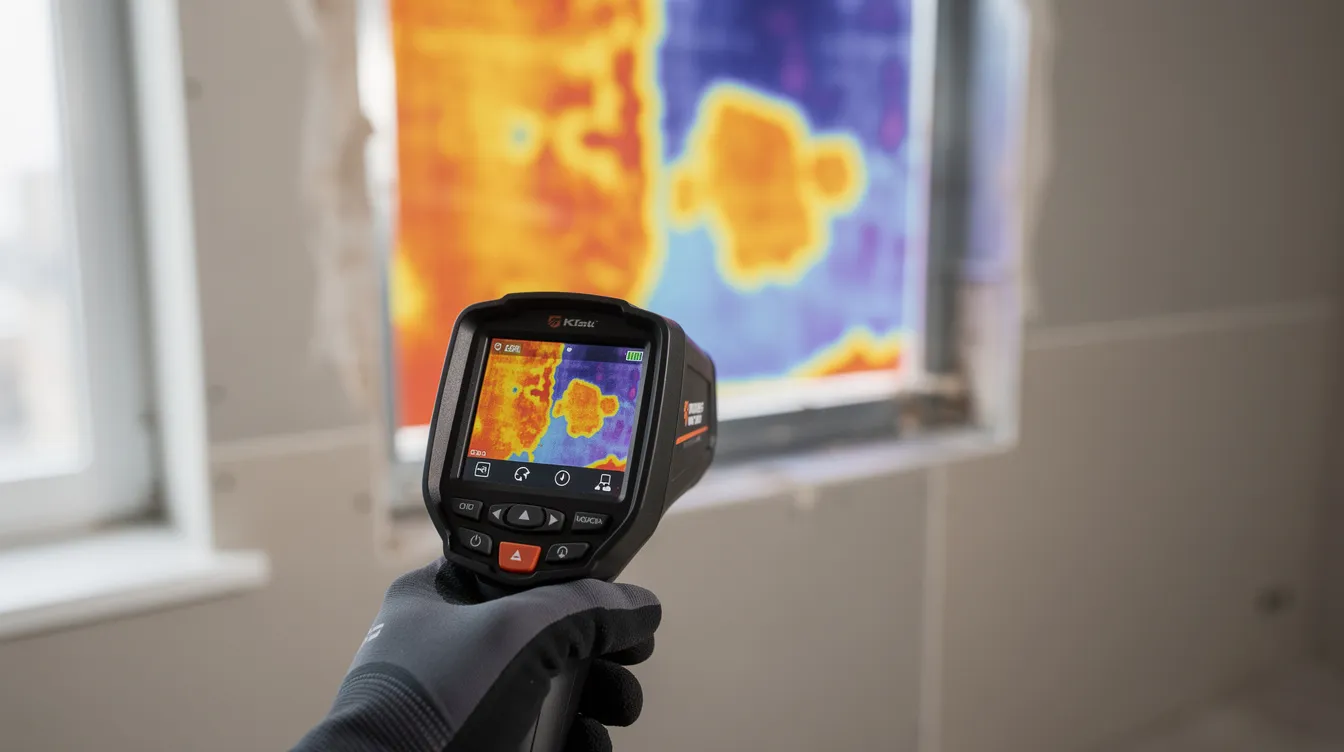
Finding hidden moisture requires more than visual inspection. Predator Restoration emphasizes hands-on diagnostics using advanced tools to locate water damage safely—without unnecessary demolition. Using moisture detection tools can help locate hidden water and prevent future damage.
Detection equipment and methods:
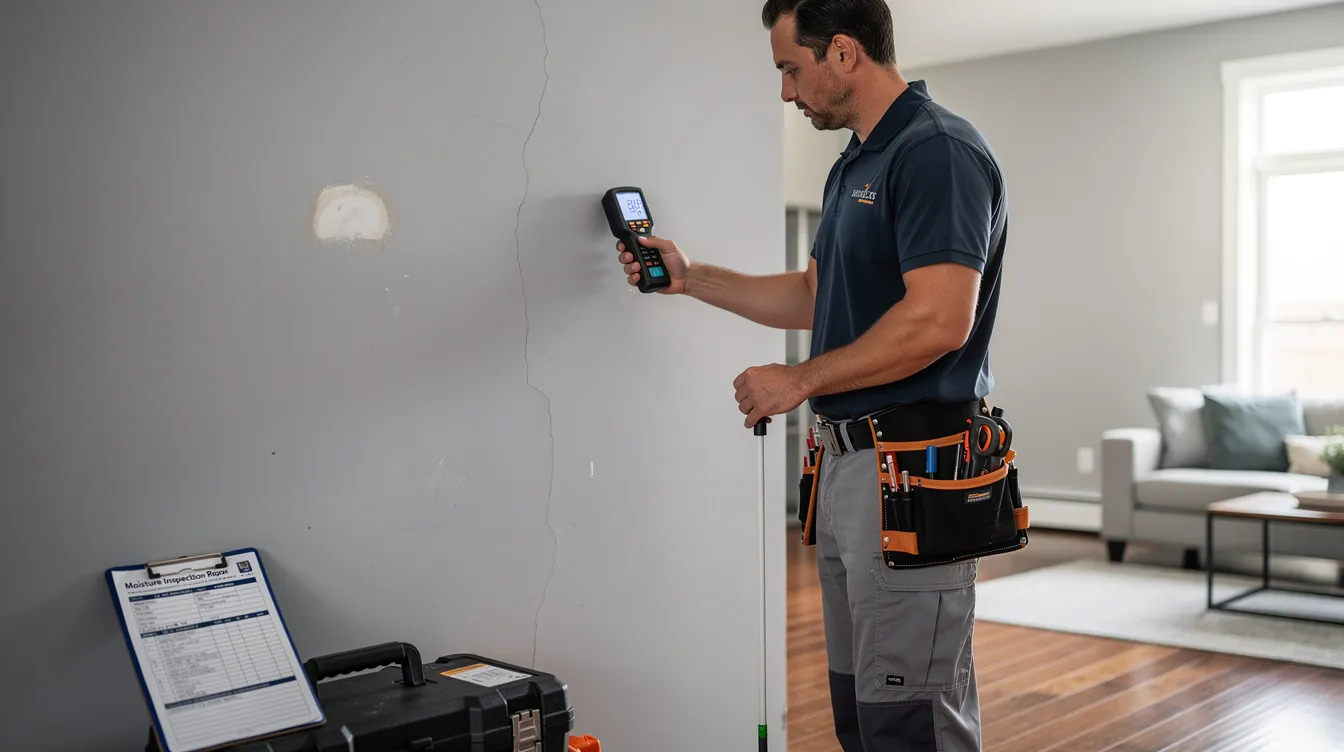
- Non-invasive moisture meters (pin-type for wood/studs, RF-based for drywall up to 1.5 inches deep)
- Thermal imaging cameras detecting temperature differentials as small as 0.1°C, revealing “cold spots” from evaporative cooling
- Hygrometers and psychrometers to calculate specific humidity and dew point
- Borescopes (fiber-optic cameras) inserted through small inspection holes to visually confirm insulation saturation and cavity conditions
Our diagnostic process:
- Map moisture vertically (floor to ceiling) and horizontally along walls to understand migration patterns
- Check adjacent areas—ceilings below bathrooms, walls next to AC closets, corners near exterior doors
- Evaluate insulation type (fiberglass batts, blown-in cellulose, open-cell spray foam) to determine drying feasibility
- Assess wall assembly construction for the safest approach to opening, drying, or restoring affected areas
- Document all findings with timestamped photos and meter readings to support insurance claims
Thermal imaging provides 95% accuracy for initial scans without any demolition. However, multi-layer walls sometimes require borescope confirmation. Our moisture monitoring continues throughout the restoration process to verify complete drying.
Schedule a professional moisture inspection: Contact us online or call (832) 937-4620 for 24/7 response anywhere in greater Houston.
Once water damage is detected, a thorough restoration process is essential. Let’s review the step-by-step process for repairing water damage behind walls in Houston.
Our Step‑By‑Step Process for Repairing Water Damage Behind Walls in Houston
Professional water damage restoration involves a five-step process: assessment, water extraction, drying, cleaning, and restoration. Immediate water extraction is crucial to prevent further damage and mold growth. Structural drying is essential to remove moisture absorbed into building materials after water intrusion.
Predator Restoration follows a structured, IICRC-informed water damage restoration process tailored specifically for Houston’s humidity challenges. From emergency extraction to full rebuild, every phase focuses on thoroughness—not shortcuts.
Unlike “blow-and-go” companies that simply place fans without addressing hidden cavities, we open, dry, and restore affected materials completely. This prevents callbacks, mold surprises, and structural problems months down the road.
Step 1: Emergency Response, Safety, and Moisture Assessment
We respond quickly across greater Houston for active leaks or recent damage. When disaster strikes, our teams are dispatched immediately.
Immediate actions include:
- Shut off the water source if accessible (main valve for burst pipes or slab leaks)
- Protect nearby contents from further damage
- Check for electrical and structural safety before opening any walls
- Perform comprehensive moisture mapping on walls, ceilings, and floors
- Check behind baseboards and around doorways to define the full affected perimeter
- Identify water category (clean, gray, or contaminated water) to determine contamination risk
- Communicate findings on-site and outline the mitigation plan before proceeding
This thorough emergency water extraction and assessment phase ensures nothing is missed and the entire process is transparent from the start.
Step 2: Containment, Protection, and Controlled Demolition
Controlling the work area prevents cross-contamination and protects unaffected portions of your home or business.
Containment and demolition procedures:
- Set up 6-mil polyethylene sheeting with negative air machines and HEPA filtration (99.97% efficiency at 0.3 microns)
- Protect flooring and belongings with coverings; carefully stage furniture away from work zones
- Remove wet drywall, baseboards, and insulation only where necessary using clean, straight cuts
- Perform flood cuts—removing drywall at least 12–24 inches above the wet line to ensure cavities can dry properly
- Bag and remove all debris, especially moldy or contaminated materials, according to safety standards
This controlled approach minimizes damage to porous materials that don’t need removal while ensuring all affected materials are addressed.
Step 3: Structural Drying of Wall Cavities and Hidden Spaces
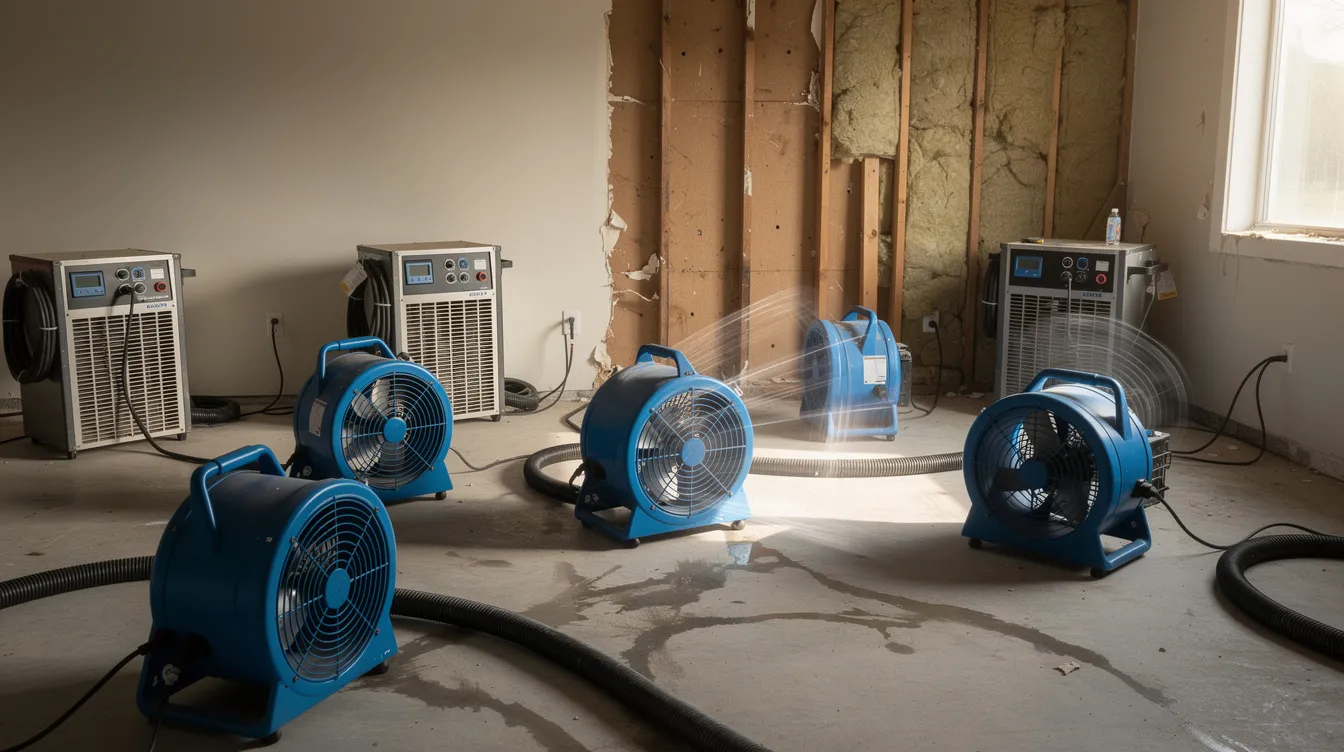
Proper structural drying is where many restoration companies fail. In Houston’s climate, professional drying equipment is essential—opening windows or running household fans cannot achieve complete drying of wall cavities.
Our drying approach:
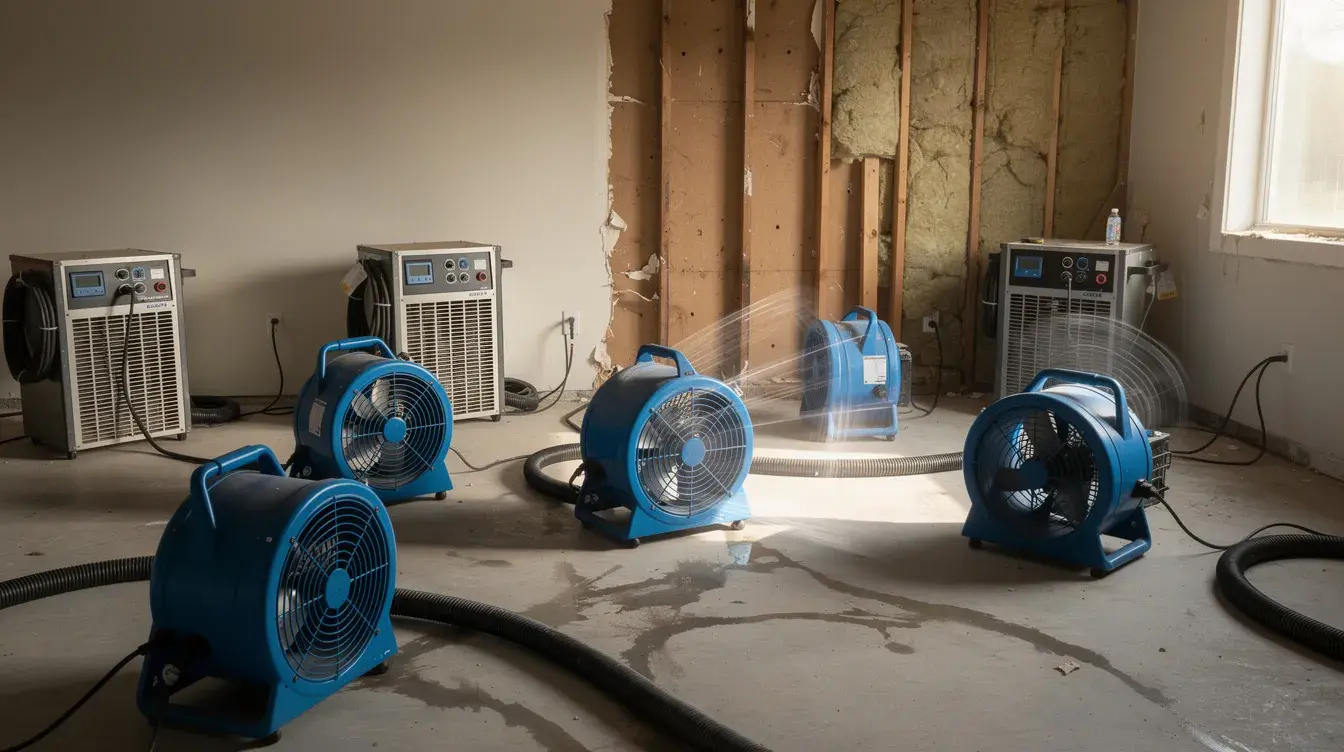
- Deploy commercial grade pumps for standing water removal, then position LGR dehumidifiers (removing 70–100 pints per day) and high-velocity air movers
- Direct airflow through opened wall cavities, behind cabinets, and into adjacent spaces
- Use wall cavity drying systems with injection ports when partial demolition is sufficient
- Monitor moisture levels daily with moisture meters until studs, sill plates, and remaining materials reach target levels (below 15% moisture content)
- Utilize desiccant dehumidifiers when humidity exceeds 80% to maintain optimal drying conditions
We never close walls or rebuild over damp structural materials. This prevents future mold growth and deterioration that would require reopening everything later.
Step 4: Cleaning, Sanitizing, and Mold Growth Prevention
Once cavities are accessible, thorough cleaning removes contaminants and prevents mold growth from taking hold.
Cleaning and treatment procedures:
- HEPA vacuum exposed framing, wall cavities, and nearby surfaces to remove dust and settled spores
- Apply EPA-registered antimicrobial agents to framing and surfaces affected by gray or black water
- Integrate full mold remediation procedures when existing mold is discovered behind walls
- Apply odor removal treatments to eliminate musty odors trapped in wall systems
For sewage backups or sewer backups affecting wall cavities, additional protocols ensure all contaminated water residue is properly sanitized before reconstruction.
Step 5: Reconstruction and Cosmetic Restoration
After materials are verified dry through final moisture monitoring readings, our rebuild team completes the restoration.
Reconstruction services include:
- Replace insulation with appropriate R-value materials
- Hang new drywall, tape, float, and texture to match existing finishes (knockdown, orange peel, smooth)
- Prime and paint with mold-resistant products
- Reinstall baseboards, trim, doors, and cabinets
- Repair affected flooring near walls
Our goal is bringing your space back to pre-loss condition or better, with seamless blending that doesn’t look like “patch work.” Having mitigation and reconstruction handled by the same company simplifies scheduling, communication, and insurance coordination throughout the claims process.
With a clear understanding of the restoration process, it’s important to recognize why hidden water behind walls is especially dangerous in Houston’s climate.
Why Hidden Water Behind Walls Is More Dangerous in Houston’s Climate
Houston’s environment makes behind-the-wall moisture especially risky compared to drier regions. Understanding these factors explains why professional mitigation is essential—not optional.
Humidity:
- Average relative humidity of 70–90% from April through October slows natural evaporation
- Mold can double its growth every 24 hours in Houston versus 48 hours in arid climates
- Wet building materials remain saturated far longer than in less humid environments
Temperature:
- Warm indoor temperatures (70–95°F) keep conditions in the ideal range for mold and bacteria multiplication
- Houston’s climate matches the optimal growth temperature for dangerous molds like Stachybotrys (black mold)
Building design:
- Common use of stucco and brick veneer with limited cavity ventilation traps moisture
- Multi-story homes with upstairs plumbing create hidden leak pathways into lower-floor walls
- 1980s–2000s construction with foam board EIFS systems can conceal water migration
Storm and hurricane history:
- Frequent heavy-rain events push water into building envelopes
- Hurricane Harvey (2017) left 20–30% of affected properties with residual hidden moisture
- Many Houston properties have prior unaddressed damage that compounds new water events
Because of these factors, “wait and see” approaches almost always lead to extensive structural damage and significantly higher repair costs. Relying on fans or opening windows—especially in summer months—cannot remove moisture from wall cavities in Houston’s conditions. Professional structural drying with specialized equipment is the only reliable solution.
Understanding the risks unique to Houston, let’s compare how water damage behind walls affects residential and commercial properties.
Residential vs. Commercial Water Damage Behind Walls
Predator Restoration handles both homes and commercial buildings throughout greater Houston, tailoring our strategy to each property type.
Residential properties:
- Common issues include bathroom leaks, AC closet overflow, and exterior wall intrusion
- Focus on protecting families, maintaining indoor air quality, and preserving finishes
- Single-family homes and townhomes in Willowbrook, Klein, and Kingwood often have specific vulnerabilities based on construction era
- Minimize disruption to daily living while thoroughly addressing all affected cavities
Commercial properties:
- Office buildings, retail spaces, medical offices, and multifamily common areas present unique challenges
- Wall cavities may conceal water around restrooms, mechanical rooms, and tenant build-outs
- Business interruption considerations require phased containment and after-hours work
- Tenant coordination and communication are essential for occupied commercial spaces
- Businesses affected by water damage need restoration services that minimize downtime
Our on-site, hands-on approach ensures minimal disruption for both residential and commercial clients while still opening and drying all affected wall systems thoroughly.
After understanding the differences in property types, it’s important to know how insurance can help with water damage behind walls in Houston.
Insurance and Water Damage Behind Walls in Houston
Many cases of sudden, accidental water damage behind walls are at least partially covered by homeowner’s or commercial property insurance—but coverage varies significantly by policy.
Documentation we provide:
- Moisture readings at multiple points throughout affected areas
- Photos of open walls showing material conditions
- Detailed estimates using industry-standard Xactimate software
- Psychrometric data logs showing drying progress
Commonly covered events:
- Burst pipes and broken pipes
- Sudden AC line failures
- Appliance failures (water heaters, washing machines, refrigerator lines)
- Storm-created openings that allow water intrusion
Typical exclusions:
- Long-term slow leaks resulting from poor maintenance
- Pre-existing damage or gradual deterioration
- Groundwater intrusion without separate flood coverage
- Neglected hidden leaks discovered after extended periods
Predator Restoration can coordinate directly with adjusters, explain the necessary mitigation and reconstruction scope, and provide documentation that supports your insurance claim. Prompt mitigation typically results in lower total repair costs—which benefits both you and your insurance provider.
Contact your carrier promptly, then call Predator Restoration at (832) 937-4620 so mitigation can begin while your claim is being opened. If you’re unsure about coverage, reach out online and we can help you understand your options.
Now that you know how insurance can help, let’s discuss how to prevent water damage behind walls in Houston properties.
Preventing Water Damage Behind Walls in Houston Properties
Preventing water damage behind walls is essential for Houston homeowners and businesses who want to avoid costly repairs, extensive structural damage, and the health risks associated with mold growth. Houston’s humid climate, frequent storm flooding, and aging infrastructure make properties especially vulnerable to hidden leaks, burst pipes, and slow leaks that can go undetected until significant damage has occurred.
Regular Inspections and Maintenance
- Schedule routine plumbing inspections to catch leaks early.
- Check around windows, doors, and exterior walls for signs of water intrusion.
- Inspect AC condensate lines and drain pans regularly, especially during peak cooling months.
- Maintain your roof and flashing to prevent rainwater from entering wall cavities.
- Replace aging pipes and fittings before they fail.
Monitoring Indoor Humidity
- Use dehumidifiers to keep indoor humidity below 60%.
- Ensure proper ventilation in bathrooms, kitchens, and laundry areas.
- Install moisture alarms in areas prone to leaks, such as under sinks and near water heaters.
- Monitor your water bill for unexplained increases, which can indicate hidden leaks.
By taking these preventive steps, you can reduce the risk of hidden water damage and protect your property investment.
With prevention in mind, let’s see why Houston property owners trust Predator Restoration for water damage behind walls.
Why Houston Property Owners Trust Predator Restoration for Water Damage Behind Walls
Houston properties face unique water damage risks, and property owners throughout greater Houston trust Predator Restoration for thorough, professional mitigation.
24/7 emergency response:
- Around-the-clock availability with rapid dispatch
- Houston teams serving Willowbrook, Klein, Cypress, Jersey Village, Kingwood, North Houston, Spring TX, and surrounding communities
- We respond quickly when you need emergency repairs
Deep inspections:
- Focus on identifying hidden moisture behind walls, under floors, and in ceilings
- We don’t just dry what you can see—we find what you can’t
Comprehensive damage restoration services:
- Water removal and emergency extraction
- Structural drying with professional drying equipment
- Mold remediation and mold removal
- Sewage cleanup for contaminated water events
- Odor removal for musty odors
- Full rebuild and reconstruction
Local expertise:
- Experience with Houston-specific issues: AC drain failures, bayou-related storm flooding, high-humidity drying challenges
- Knowledge of construction types common in different neighborhoods
- Understanding of Houston’s climate and how it affects water intrusion and drying
Mitigation-first mindset:
- Whenever possible, we restore instead of replace
- This approach reduces downtime and cost while still addressing all affected cavities
- We minimize damage rather than allowing further damage to occur
Ready for immediate help with water damage behind walls? Call Predator Restoration now at (832) 937-4620 or request assistance via our online contact form.
Knowing who to trust is important, but timing is just as critical. Let’s discuss when to call a professional for suspected water damage behind walls.
When to Call a Professional for Suspected Water Damage Behind Walls
Timing is critical with hidden water damage. Delays of even 24–48 hours can dramatically change the scope and repair costs of your project.
Call immediately if:
- Walls feel soft, show active staining, or water has recently run along or into a wall from a known water leak
- There’s a musty odor that doesn’t go away, especially near bathrooms, kitchens, or AC closets
- You’ve noticed an unexplained increase in your water bill suggesting hidden leaks
- You’ve had recent storm flooding or appliance failures near interior walls
Why professional help matters:
- DIY drying with fans cannot remove moisture from inside wall cavities in Houston’s humid conditions
- Professional detection using thermal imaging and moisture meters locates the full extent of damage
- Structural drying with commercial equipment is the only way to achieve complete drying and prevent mold growth
- Early detection and professional mitigation prevent severe damage and significantly reduce total repair costs
Every hour that water remains trapped behind your walls increases the risk of mold, deterioration, and expensive reconstruction. Don’t let a small leak become a major problem.
Contact Predator Restoration 24/7 at (832) 937-4620 or message us online for fast, thorough help with water damage behind walls anywhere in the Houston area.