

Key Takeaways
- Many flooded hardwood floors in Houston can be saved, but only when professional restoration begins within 24–48 hours of water exposure.
- Clean-water flooding from a burst pipe or appliance leaks offers the best salvage potential, while contaminated floodwater from storm flooding or sewage often requires replacement.
- Predator Restoration’s Houston-based team uses moisture meters, thermal imaging, and specialty wood-floor drying systems to assess whether floors can be restored or must be replaced.
- Houston’s high humidity and warm temperatures accelerate mold growth, making prompt structural drying critical for preventing permanent damage.
Have flooded wood floors right now? Call Predator Restoration at (832) 937-4620 or message us online for 24/7 emergency hardwood floor restoration help.
Can Hardwood Floors Be Saved After Flooding in Houston?
Yes, many hardwood floors in Houston homes and businesses can be saved after flooding—but only with fast, professional response. The Gulf Coast humidity and heat create conditions where water damage escalates rapidly, making the first 24–48 hours critical.
Predator Restoration evaluates each floor based on the water source, time elapsed since flooding, wood species, installation type, subfloor beneath the planks, and the extent of water damage. Whether you’re dealing with 2024 spring thunderstorms, Hurricane-season downpours, or a water leak from supply lines, hardwood can often be dried, flattened, and refinished if action starts immediately.
Long-standing water, repeated flooding, or heavy contamination often forces partial or full replacement. Predator Restoration handles both hardwood floor restoration and complete reconstruction when needed.
Don’t wait. Call Predator Restoration now at (832) 937-4620 for an on-site hardwood floor damage inspection in Houston, Cypress, Willowbrook, Klein, Jersey Village, Kingwood, and nearby areas.
What Happens to Hardwood Floors After a Flood?
Wood naturally absorbs moisture, and Houston’s warm, wet climate accelerates swelling, warping, and mold growth after any flood event. Hardwood floor water issues, such as water leaks and flood damage, require prompt water extraction and advanced drying techniques to prevent long-term damage to hardwood floors, subfloors, and underlying structures.
Common visible damage includes:
- Cupping: Outside edges rise higher than the center of boards
- Crowning: Center rises higher than edges
- Buckling: Boards lift completely from the underlying subfloor (buckling or warping usually requires professional repair or partial replacement of affected boards.)
- Gaps and finish blistering: Separation between planks and lifted coatings
Signs of water damage in hardwood floors include visible moisture on the surface and water seeping through the seams of the boards when stepped on. Discoloration in wood, including dark or light patches, is a common symptom of water damage.
Surface dryness is deceptive. Water often migrates underneath planks, into the subfloor, baseboards, walls, and under cabinets—causing extensive damage that visual inspection alone cannot detect. Water damage and structural issues in subfloors can lead to long term problems such as instability, odors, and mold growth, emphasizing the importance of replacement to prevent future complications.
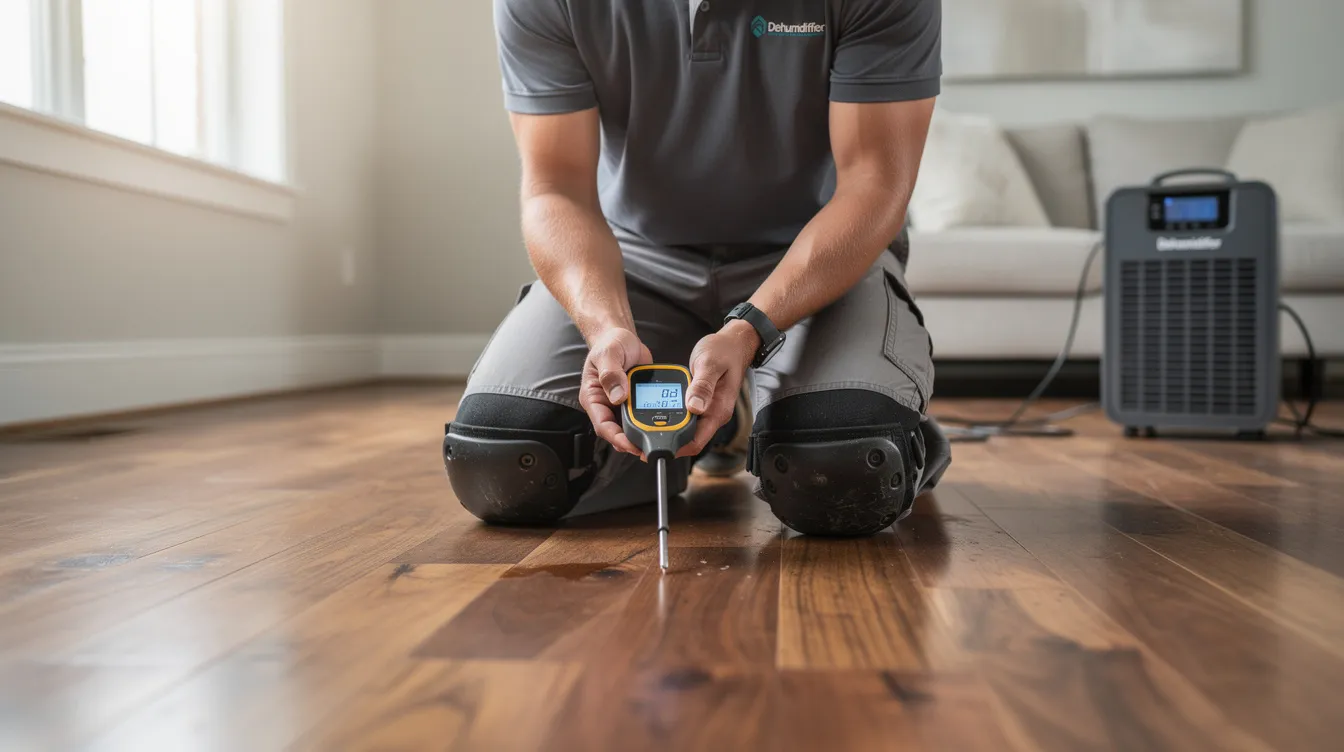
When standing water sits on hardwood for more than 24–72 hours, the risk of permanent deformation and structural damage increases significantly. Predator Restoration’s technicians use professional moisture meters and thermal imaging to map moisture content under and around flooring, ensuring nothing is missed. Cupping and warping of hardwood floors occur when the top dries faster than the bottom due to trapped moisture.
Factors That Decide If Your Flooded Hardwood Floors Can Be Saved
No two Houston flood events are identical. These key factors guide whether Predator Restoration recommends drying, partial repair, or full replacement:
| Factor | Impact on Salvageability |
|---|---|
| Time elapsed | Floors reached within 24–48 hours have higher salvage rates |
| Water category | Clean water (Category 1) vs. contaminated water (Category 3) |
| Wood type | Solid hardwood vs. engineered wood vs. laminate |
| Subfloor material | Concrete slabs vs. plywood/OSB subfloors; other types, such as wooden and concrete subfloors, are affected differently—concrete may resist water better but can trap moisture, while wooden subfloors are more prone to warping and rot and often require replacement after flooding |
| Houston climate | High humidity speeds mold—prompt dehumidification is critical |
Category 3 water from storm surges, bayou overflows near North Houston and Kingwood, or sewage backup typically requires removal for safety reasons. Contamination from ‘black water’ typically necessitates complete replacement of the floor and subfloor for health and safety reasons. Floors exposed to heavily contaminated floodwater cannot be safely dried in place.
Predator Restoration provides honest, written recommendations explaining when repair is realistic and when replacement is the safer long-term option.
Immediate Steps to Take When Hardwood Floors Flood in Houston
The first hours after discovering flooded floors determine whether they’re salvageable. Act quickly:
- Stop the water source – Shut off main supply valves or contact utilities for city line breaks
- Avoid walking on buckled flooring – Unstable boards create safety hazards and can lead to further deterioration of the home’s structure.
- Remove clean standing water – Use mops, towels, or wet/dry vacs only if water isn’t contaminated or electrically hazardous. For larger amounts, high-powered pumps and industrial-grade vacuums are used to remove water quickly and efficiently.
- Move furniture and rugs – Prevent staining, trapped moisture, and additional loading on warped areas. Move all wet furniture and items to a dry area immediately to prevent trapped moisture and further damage.
- Assess and remove carpet and pad if present – Removing carpet and pad is often necessary to prevent damage to the sub-floor and allow proper drying.
- Increase air circulation – Open interior doors; avoid high-heat space heaters that cause cracking
Warning: Quick water extraction with proper equipment is necessary to prevent extensive damage to flooring, carpets, and drywall. DIY methods like household fans rarely remove water from beneath boards and the subfloor beneath. Professional dehumidification is essential in Houston’s climate to prevent mold and further damage.
Contact Predator Restoration’s 24/7 emergency team immediately at (832) 937-4620 or via our online contact form.
Preventing Mold Growth After Flooding
Preventing mold growth is one of the most important steps in flood damage restoration for hardwood floors and wood floors. After flooding, moisture trapped in water damaged wood floors creates the perfect environment for mold to develop—sometimes in as little as 24 to 48 hours. If left unchecked, mold can cause significant damage to both the floors and the underlying structure, leading to costly repairs and long-term health concerns.
To prevent mold growth, it’s essential to act quickly and thoroughly dry all affected areas. This means not only removing visible water from the surface, but also ensuring that moisture is eliminated from beneath the boards, the subfloor, and any nearby walls or baseboards. Specialized drying equipment and moisture meters are used to monitor and control moisture levels throughout the restoration process, making sure that every part of the wood is properly dried.
Predator Restoration’s Hardwood Floor Flood Recovery Process
Predator Restoration uses a hands-on, on-site approach for floor water damage across greater Houston—from Willowbrook and Cypress to Jersey Village and Kingwood. As part of our comprehensive water damage restoration services, immediate water extraction and specialized drying techniques are necessary to restore hardwood floors after a flood.
Initial Assessment
- On-site inspection with moisture readings using professional moisture meters
- Moisture mapping with thermal imaging
- Water category identification and contamination screening
- Detailed documentation for insurance claims
Water Extraction and Drying
- Pumping and vacuum extraction to remove water from affected areas
- Immediate water extraction is critical, as solid hardwood has a high save rate if professional drying begins within 48 hours of exposure.
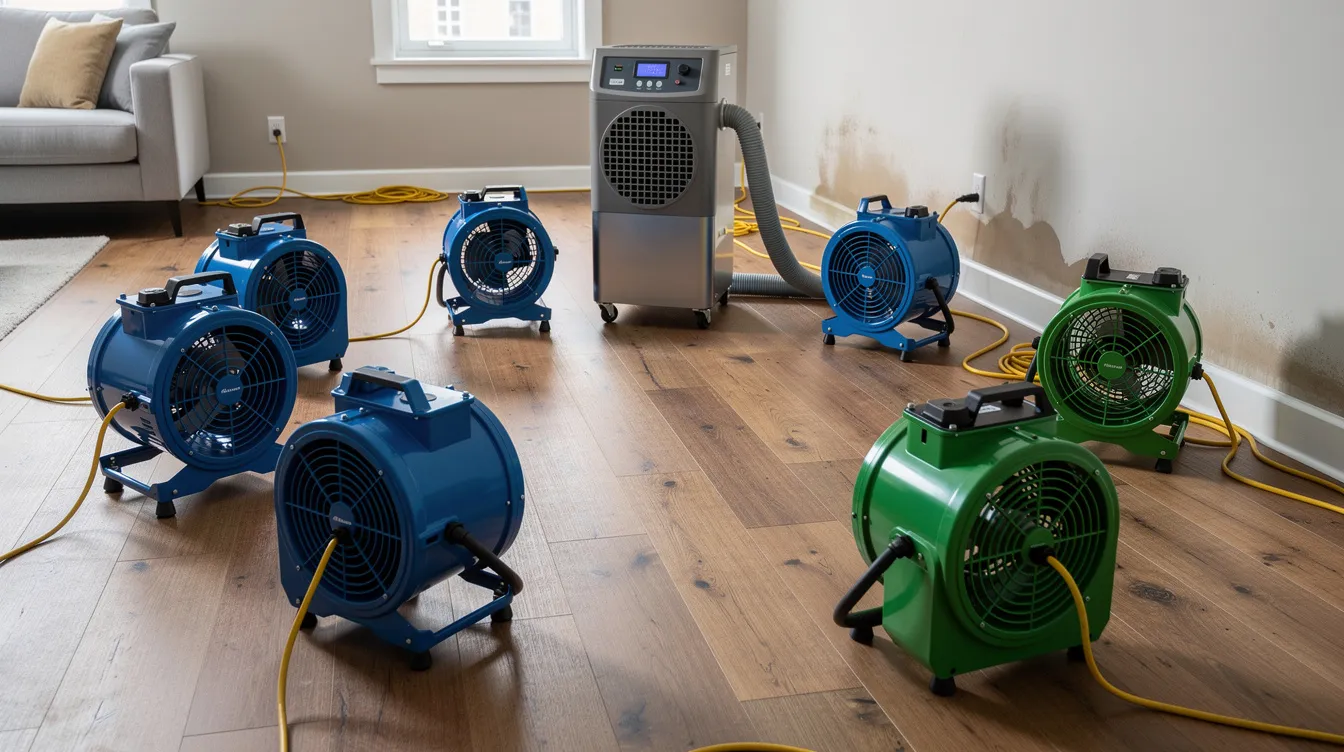
- Deployment of low-profile wood floor drying systems, including specialized drying mats and Injectidry systems that use high-velocity airflow or negative pressure to remove moisture from wood and subfloors
- Moisture can become trapped between hardwood floors and concrete slab foundations, making standard fans insufficient for proper drying.
- Air movers and commercial dehumidifiers sized for Houston’s humidity; industrial-grade dehumidifiers and fans should run continuously to help control the environment post-flood.
- Controlled dehumidification is important in humid climates to stabilize the environment and prevent wood damage.
- If the subfloor is saturated, hardwood may need to be removed to ensure thorough drying.
- Daily moisture level monitoring until drying goals are reached; professional drying can take 7 to 10 days and moisture content must stabilize before sanding or refinishing.
Cleaning and Restoration
- Antimicrobial treatments for odor control and to prevent mold growth
- Sanding and refinishing cupped or slightly deformed boards; sanding should only occur after moisture meters confirm the floors are completely dry to avoid thinning.
- Minor surface damage on hardwood floors can often be saved through drying and light sanding.
- Selective replacement of unsalvageable planks with color-matching
- Full rebuild and reconstruction services when contamination or structural damage is extensive
Throughout the efficient drying process, Predator Restoration documents conditions and progress to assist with homeowners’ insurance claims.
When Flooded Hardwood Floors Must Be Replaced
Predator Restoration always tries to save Houston homeowners’ floors first, but safety and structural integrity sometimes require replacement.
Replacement is typically necessary when:
- Standing water remained for several days or more
- Extensive buckling or separation from the subfloor has occurred
- Floors were exposed to sewage or heavily contaminated floodwater
- Recurring floods have weakened both hardwood and subfloor
- Deeply saturated wooden subfloors have lost structural strength
Predator Restoration provides transparent estimates comparing restorative drying and refinishing versus partial or full replacement—helping property owners choose the most cost-effective solution. The team can coordinate reconstruction, including installing new hardwood or alternative flooring better suited to high-moisture areas.
Houston-Area Risks: Why Timing Is Critical for Wood Floors
Houston’s geography—bayous, heavy seasonal thunderstorms, and Gulf storms—makes fast action essential for water damaged wood floors.
Key local factors:
- Humidity and heat: Mold growth can begin within 24–72 hours on damp wood in areas like North Houston, Kingwood, and Cypress
- Slab foundations: Low-lying neighborhoods near bayous trap moisture under flooring after floodwaters recede
- Flash flooding: Spring and summer storms introduce Category 3 water loaded with bacteria and chemicals
- Plumbing failures: Slab leaks and appliance leaks are common in Houston’s home’s structure
Predator Restoration’s local expertise covers Houston-specific conditions, from storm surge cleanup to neighborhood street flooding in both residential and commercial properties.
Why Houston Property Owners Choose Predator Restoration for Flooded Hardwood Floors
Predator Restoration is a Houston-based, hands-on property restoration company focused on thorough mitigation—not surface-level repairs that leave damaged materials behind.
What sets us apart:
- 24/7 emergency response across Houston, Willowbrook, Klein, Cypress, Jersey Village, and Kingwood
- Meticulous on-site assessments with moisture detection and contamination screening
- Full restoration services: water removal, structural drying, hardwood floor restoration, mold remediation, odor removal, and rebuild/reconstruction
- IICRC certified technicians who handle water damage the right way
- Clear communication with plain-language explanations and insurance coordination
Avoid costly repairs from hidden moisture. Protect your property and restore your floors with a team that knows Houston’s unique challenges.
Call Predator Restoration at (832) 937-4620 or message us online now to schedule an inspection for water-damaged hardwood floors anywhere in greater Houston.
FAQ: Saving Hardwood Floors After Flooding in Houston
How fast do I need to act to save my hardwood floors after a flood?
Treat the first 24–48 hours as critical. Call Predator Restoration immediately once flooding is discovered—ideally the same day—for the best chance of salvaging hardwood. Delays beyond a couple of days, especially in hot, humid weather, greatly increase the odds of permanent warping, significant damage, and necessary replacement.
Can I just run fans and dehumidifiers myself and avoid professional help?
Household fans may dry surface moisture but rarely pull water from underneath boards, the subfloor, drywall, or wall cavities. Misuse can spread moisture further. Predator Restoration uses professional-grade dehumidification, specialty wood-floor drying equipment, and moisture readings to ensure deep, efficient drying that DIY methods cannot achieve.
Will my insurance cover hardwood floor restoration or replacement after flooding?
Coverage depends on your specific policy and the cause of damage—whether from a sudden burst pipe, groundwater flooding, or sewage backup. Contact your insurer promptly. Predator Restoration provides detailed documentation of damage, drying logs, and repairs to support insurance claims but does not determine coverage decisions.
What if only part of my hardwood floor is damaged—can you match new boards to old ones?
Predator Restoration can often replace only the affected area, then sand and refinish a larger continuous section so new boards blend seamlessly. Exact matches depend on wood species, age, sun exposure, and previous finishes, but technicians work to minimize visible transitions.
Is it safe to stay in my home while flooded hardwood floors are being dried?
In many clean-water situations, it may be safe to remain home, though equipment noise and airflow can be disruptive. For cases involving contaminated floodwater, heavy mold, or significant damage, Predator Restoration may recommend temporary relocation until hazards are mitigated.