
Understanding Water Damage
Water damage is a serious concern for both homeowners and businesses in Houston, TX, and can strike unexpectedly due to a variety of causes. Common sources include appliance leaks, burst pipes, and severe weather events like floods. When water damage occurs, it doesn’t just affect the visible surfaces—if left untreated, it can quickly lead to further damage beneath tile floors, inside walls, and throughout the property. One of the most significant risks is mold growth, which can develop rapidly in Houston’s humid climate and pose health hazards to occupants.
This guide is for Houston homeowners and business owners concerned about tile floor water damage. Houston’s climate and frequent storms make tile floor water damage a common and urgent issue.
Common Causes
The effects of water damage go beyond structural issues. Mold, bacteria, and lingering moisture can compromise indoor air quality and lead to costly repairs if not addressed promptly.
Consequences of Water Damage
That’s why working with a professional water damage restoration company is essential. Restoration experts have the tools and experience to assess the full extent of the damage, remove hidden moisture, and restore your property to its original condition. By understanding the causes and consequences of water damage, property owners in Houston can take the right steps to protect their investment and ensure a safe, healthy environment.
Why Professional Help Matters
Whether you’re a homeowner or a business owner, recognizing the signs of water damage and acting quickly can make all the difference. A reputable restoration company in Houston, TX, can provide the restoration services needed to mitigate damage, prevent mold, and restore your property efficiently and professionally.
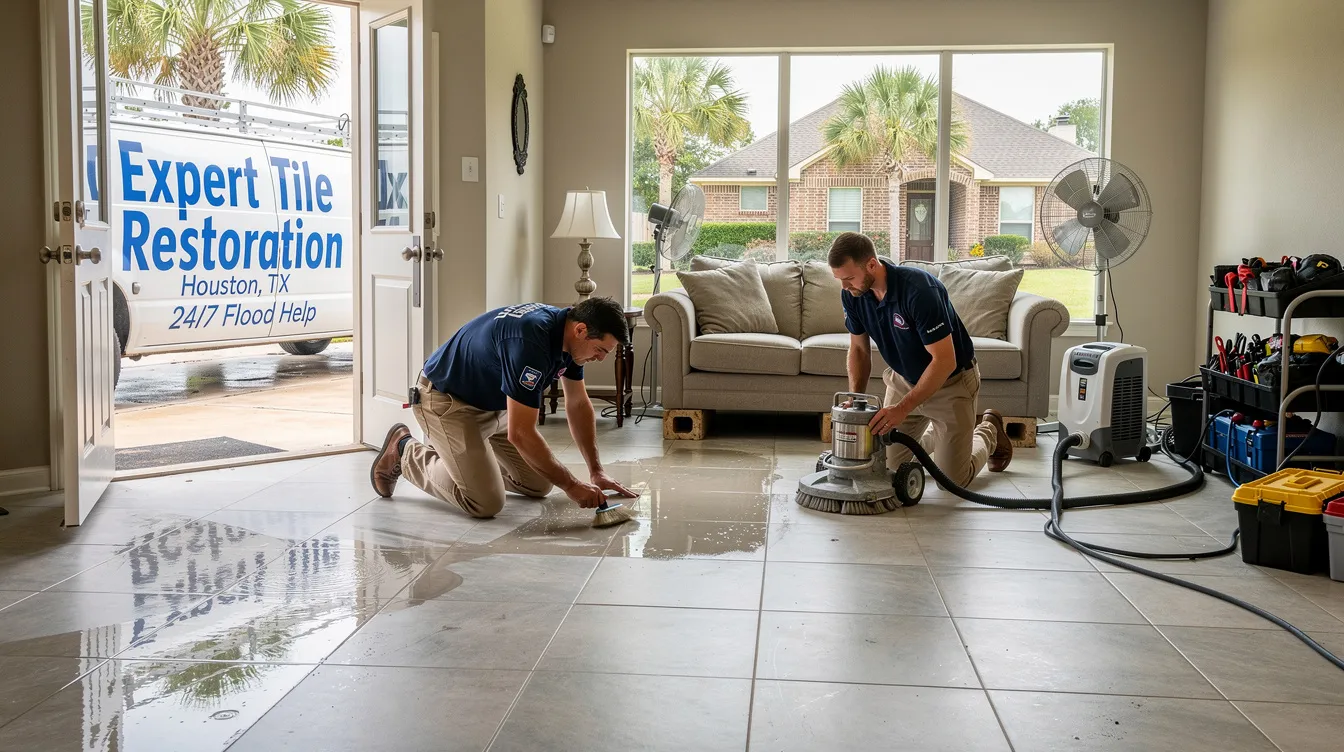
Fast Tile Floor Water Damage Help in Houston
Why Tile Floor Water Damage Is Dangerous
Tile floors in Houston homes and businesses—whether built in 1985 or 2024—frequently conceal severe water damage that property owners never see coming. After leaks, flooding, storms, and plumbing failures, water penetrates grout lines, soaks into underlayment, and saturates subfloors while the tile surface appears completely intact. This hidden moisture creates the perfect environment for mold growth, loose tiles, and structural deterioration that escalates repair costs dramatically if left untreated.
24/7 Emergency Response
Predator Restoration Inc. is a Houston-based water damage restoration company providing 24/7 emergency services specifically designed to address tile floor water damage across residential and commercial properties. Our technicians personally respond to properties throughout Houston, Willowbrook, Klein, Cypress, Jersey Village, Kingwood, North Houston, and surrounding communities with rapid on-site arrival times. We specialize in detecting hidden moisture beneath tile surfaces, extracting trapped water, and completing thorough mitigation that prevents secondary damage.
The Importance of Fast Action
What makes tile floor water damage particularly dangerous is the time factor. Water trapped beneath tile can initiate mold colonization within 24-48 hours under Houston’s warm temperatures and high humidity levels. The longer moisture remains in grout lines, thinset, and subfloor materials, the greater the risk of debonding, wood rot, and indoor air quality problems. Per IICRC S500 standards, rapid extraction and drying within 24-72 hours is essential to prevent these consequences.
If you’re dealing with wet tile floors or suspect hidden water damage, call Predator Restoration immediately at (832) 937-4620 for professional inspection and water removal. Our emergency crews are available day and night to assess your property and begin the restoration process. You can also message us online for rapid response and schedule a moisture assessment.
Common Causes of Tile Floor Water Damage in Houston
Houston’s subtropical climate creates a perfect storm for tile floor water damage. With average annual rainfall exceeding 50 inches, humidity levels frequently above 70%, and the constant threat of tropical storms, even well-maintained properties face significant risk. Combined with aging plumbing systems in homes built between 1980 and 2000, tile water damage has become one of the most common restoration needs across the greater Houston area.
The most frequent causes of water intrusion beneath tile floors include:
Appliance leaks in kitchens rank among the top culprits. Dishwasher hose failures can leak 5-10 gallons per hour onto kitchen tile, while refrigerator icemaker line bursts saturate porcelain and ceramic tile surfaces before homeowners notice the problem. These slow leaks often migrate under cabinets and into adjacent rooms before becoming visible.
Bathroom water sources create persistent issues. Overflowing showers, tubs, and toilets erode grout seals over time, with porous cementitious grout absorbing 10-20% of its weight in water. Bathrooms in homes throughout Kingwood, Cypress, and North Houston commonly show signs of subsurface moisture even when tile surfaces appear dry.
Slab leaks and supply line failures affect approximately 1 in 10 Texas homes due to the region’s expansive clay soils, which shift foundations by up to one inch yearly. Polybutylene pipes installed before 1995 have failed in roughly 40% of cases nationwide, making older Houston properties particularly vulnerable to sudden burst pipe events.
Storm and flood intrusions remain a major concern. Hurricane Harvey in 2017 dumped up to 60 inches of rain in some Houston areas, while Tropical Storm Imelda delivered 40 inches in 2019. These events flooded entryways, living rooms, and commercial lobbies with contaminated water that penetrated tile assemblies throughout affected properties.
Roof leaks often go undetected until water migrates through ceilings, down walls, and onto tile floors in hallways and downstairs units. Water spreads under baseboards at 1-3 feet per day horizontally, affecting adjacent rooms even when the original tile appears undamaged.
Commercial properties face their own challenges. Restaurants, medical offices, and retail stores in Willowbrook, Jersey Village, and surrounding areas frequently experience tile water damage from restroom leaks, mop sink overflows, and equipment malfunctions. Property management reports indicate commercial spaces have 30% higher incidence of these water intrusion events.
To schedule a professional moisture assessment for your property, call Predator Restoration at (832) 937-4620.
Hidden Risks Under Wet Tile Floors
Layers Affected by Water
Many property owners assume tile floors are waterproof, but this misconception creates serious problems when water damage occurs. While ceramic and porcelain tile materials themselves have low water absorption rates (less than 0.5%), the real danger lies in what happens below the tile surfaces once water seeps through grout joints, cracked tiles, and perimeter edges.
Cracked tiles can create tripping hazards and allow water to seep underneath, leading to mold or structural damage.
Water that penetrates a tile floor assembly pools in multiple layers:
| Layer | Description | Moisture Risk |
|---|---|---|
| Thinset/Mortar | 0.5-1 inch thick adhesive layer | Hygroscopic, absorbs and retains moisture |
| Cement Board | 1/4-1/2 inch backer board | Absorbs 5-10% moisture content |
| Plywood/OSB | Wood subfloor in elevated homes | Swells 20-50% at elevated moisture levels |
| Concrete Slab | Standard Houston construction | 5-15% porosity, retains moisture 90+ days |
Standing water seeps into floors, baseboards, walls, and subfloors, worsening the damage the longer it sits.
Primary Risks
The primary risks from trapped subsurface moisture include:
- Mold colonization begins within 24-48 hours when relative humidity exceeds 60% and temperatures reach 77°F—conditions Houston’s climate provides year-round. Species like Stachybotrys chartarum release mycotoxins that affect indoor air quality and create health hazards for occupants.
- Efflorescence and debonding occur as moisture interacts with concrete alkalinity and weakens adhesive bonds. Thinset loses 50-70% of its bond strength when moisture content reaches 15%, causing tiles to sound hollow when tapped and eventually come loose.
- Subfloor deterioration happens rapidly in wood assemblies. Plywood and OSB begin failing at 20-25% moisture content, losing up to 50% of their structural strength. Second-story bathrooms and kitchens are particularly vulnerable.
- Persistent odors from bacteria, biofilms, and volatile organic compounds signal contamination that surface cleaning cannot address.
Limitations of DIY Methods
DIY attempts to address tile water damage—mopping, using shop vacuums, or running household fans—typically remove less than 10% of trapped water while leaving 90% of the moisture locked in subsurface materials. This approach may dry tile surfaces while allowing hidden damage to progress. Using commercial dehumidifiers and air movers helps ensure the space is completely dry after water damage and is essential to prevent mold growth.
Predator Restoration uses professional-grade moisture detection equipment including penetrating meters that read to 4 inches depth, infrared cameras that reveal temperature differentials of 5-10°F over wet zones, and thermal imaging to map moisture migration beneath tile, behind walls, and under cabinets. This precision prevents the secondary mold claims that affect 80% of improperly dried properties.
Request an on-site tile moisture inspection online before damage spreads to adjacent areas of your property.
Our Tile Floor Water Damage Restoration Process
Predator Restoration follows a hands-on, step-by-step restoration process designed specifically for tile floors and the underlying materials that support them. Unlike surface-level water damage cleanup, our approach addresses the complete tile assembly—from grout lines to subfloor—ensuring your property is returned to its original condition or better.
Emergency Response & Safety
Our 24/7 dispatch sends fully equipped crews to properties throughout the Houston metro area, often arriving within 60 minutes in urban zones. Technicians immediately shut off the water source, check for electrical hazards, address slip risks from standing water, and conduct an initial visual assessment of all affected areas. This first step establishes safety protocols and identifies the scope of water intrusion before restoration work begins.
Detailed Inspection & Mapping
Professional moisture assessment distinguishes our process from competitors who rely on visual inspection alone. We deploy non-invasive moisture meters capable of detecting moisture through tile and into substrates, infrared cameras that reveal temperature variations indicating hidden water, and thermal imaging to map moisture migration patterns. Every reading is documented with photos and detailed notes that support insurance claims and reduce denial rates by up to 60%.
Water Extraction
Water extraction is the first step in the water damage restoration process. Commercial-grade extraction equipment removes standing water from tile surfaces, grout lines, and surrounding affected areas. Our truck-mounted extractors operate at 100-200 PSI, capable of removing 500-1,000 gallons per hour. This rapid water extraction prevents further damage to porous materials beneath the tile while preparing surfaces for the drying phase.
Drying and Dehumidification
Drying and dehumidification are essential to prevent mold growth after water damage. We deploy high-velocity air movers (40+ CFM), commercial dehumidifiers (70+ pints per day capacity), and specialized drying mat systems that create negative pressure to pull moisture through grout joints and tile edges. Our technicians adapt drying techniques based on whether tile is installed on concrete slab or wood subfloor—two situations requiring fundamentally different approaches to achieve completely dry conditions.
Tile and Substrate Evaluation
Once initial drying begins, we assess grout integrity, tile adhesion, and the condition of all underlying materials. Technicians tap tiles to identify hollow sounds indicating debonding, probe grout for deterioration, and evaluate subfloor, underlayment, and nearby drywall for damage. This evaluation determines what can be salvaged versus what requires removal and tile replacement.
Cleaning and Sanitizing Affected Surfaces
Cleaning and sanitizing affected surfaces is crucial after water extraction and drying. For Category 2 (gray water) and Category 3 (contaminated water) events, we apply EPA-registered antimicrobial agents at appropriate concentrations. Bathrooms, kitchens, laundry rooms, and commercial restrooms receive particular attention due to the presence of bacteria and organic buildup that can lead to mold growth if not properly treated. After water extraction, restoration services include cleaning, sanitizing, and deodorizing affected surfaces.
Repair, Replacement & Finishing
Our restoration services extend beyond drying and sanitizing. We coordinate or directly provide removal of unsalvageable tile sections, replacement of damaged underlayment or subfloor materials, reinstallation of matching tile, and any reconstruction needed to return floors to pre-loss condition. Tile repair and replacing damaged tiles are handled with attention to matching existing tile materials and grout colors for aesthetic appeal.
Each tile water damage project receives a custom plan based on property type, construction era, and extent of saturation. We reject one-size-fits-all approaches that lead to rework and hidden problems—our property-specific strategies cut rework rates by 50% compared to generic drying protocols.
Property owners dealing with wet tile floors should call Predator Restoration at (832) 937-4620 for immediate dispatch, day or night. The 72-hour window after water intrusion is critical—waiting beyond this timeframe can cut salvage rates in half.
Tile Floors on Concrete Slab vs. Wood Subfloor
Understanding your property’s construction type is essential for effective tile water damage restoration. Most Houston-area homes feature slab-on-grade construction, while some townhomes, condos, and second-story areas have tile installed over wood subfloors. Each scenario demands a different strategy for moisture removal and long-term protection.
Tile on Concrete Slab
Slab-on-grade construction became standard in Houston after the 1950s for termite resistance and cost efficiency—approximately 80% of homes in Cypress, North Houston, and surrounding communities sit on concrete slabs. When water damage occurs, moisture spreads laterally under tile at rates up to 50 square feet per day, wicking into wall cavities through capillary action in cracks as small as 1/16 inch.
The challenge with slab construction is moisture retention. Concrete’s low permeability means slabs dry at only 0.1-0.5 pounds per square foot per day, potentially retaining elevated moisture levels for over 90 days. Even after tile surfaces feel completely dry, the slab beneath may still hold damaging moisture content. Effective restoration requires extended dehumidification (typically 2-4 weeks) with continuous monitoring until readings fall below 12% moisture content.
Tile on Wood Subfloor
Wood subfloors are typical in second-story bathrooms, laundry rooms, elevated townhomes, and certain Kingwood properties. When water becomes trapped between tile and plywood or OSB, the risks escalate rapidly. Wood subfloors swell 30% perpendicular to grain at elevated moisture levels, with structural integrity compromised at moisture content above 15%.
Prolonged water exposure (beyond 72 hours) to wood assemblies often necessitates controlled tile and subfloor removal to access saturated materials, allow proper drying, and prevent fungal decay. Without this intervention, joists can lose up to 70% of their strength, creating safety hazards and costly structural repair requirements.
Predator Restoration technicians determine construction type on-site through probing, register removal inspection, and moisture meter analysis. We develop the least invasive yet effective solution for each situation, balancing the goal of saving existing tile against long-term durability and safety requirements.
Before any demolition or tile removal begins, our team provides clear explanations of findings and options to property owners. When feasible, we save up to 70% of viable tile while ensuring hidden moisture is eliminated. Our priority is always preventing future mold, squeaking floors, or loose tiles caused by residual water damage.
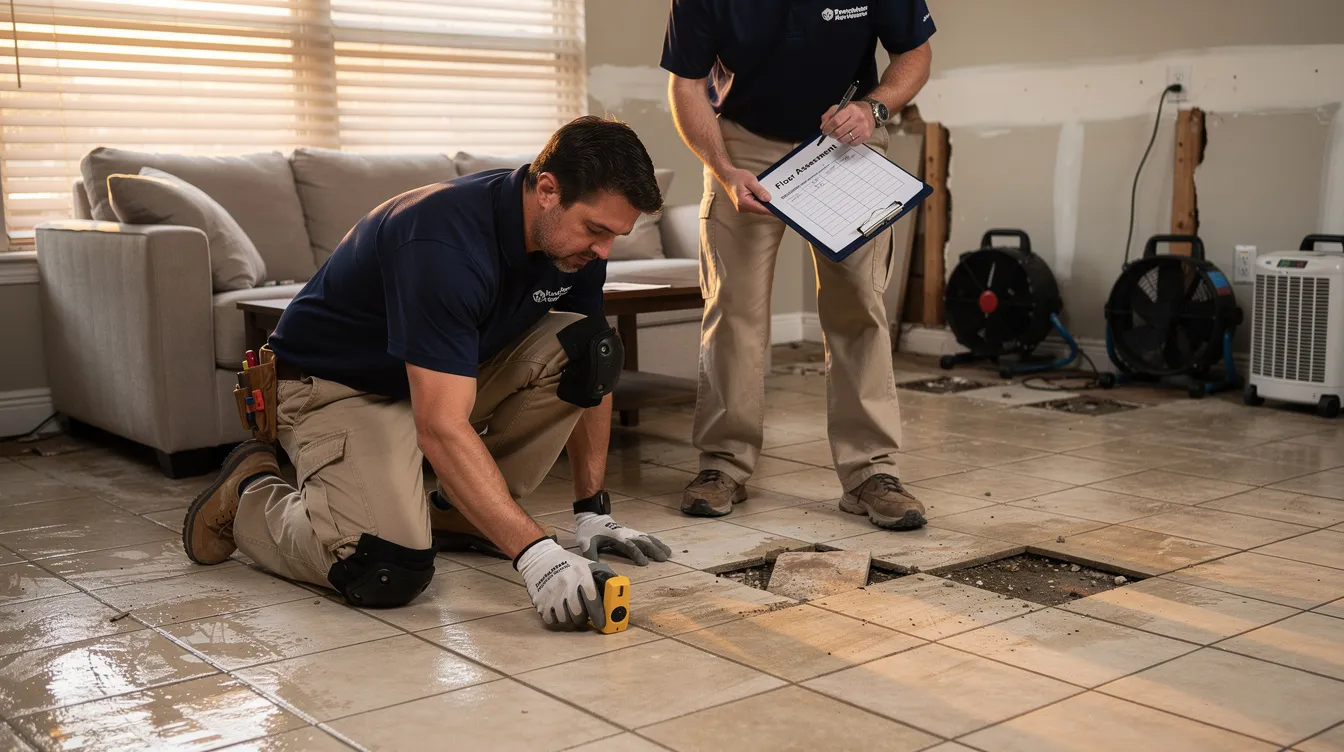
When Can Water-Damaged Tile Floors Be Saved?
Not every tile floor water damage event requires full replacement. Many floors can be dried, sanitized, and restored to their original condition when professional intervention occurs promptly. Understanding what factors determine salvageability helps homeowners and businesses make informed decisions about damage repair options.
Duration of Exposure
Time is the most critical variable. Water damage addressed within 24 hours of a clean water event has approximately 90% salvage rates for tile assemblies. Conversely, water sitting beneath tile for seven days or more drops salvage success to around 20%. Every hour that moisture remains trapped accelerates damage to adhesives, substrates, and grout.
Type of Water
Water category significantly impacts restoration options:
| Category | Source | Salvage Rate |
|---|---|---|
| Category 1 (Clean) | Supply lines, faucets | ~80% with proper drying |
| Category 2 (Gray) | Appliance leaks, dishwashers | ~50% with sanitization |
| Category 3 (Black) | Sewage, flood water | <10%, typically requires removal |
Contaminated water from sewage backups or storm flooding introduces bacteria, pathogens, and organic matter that penetrate porous materials and cannot be adequately sanitized in place.
Installation Quality
Tiles with properly bonded epoxy grout and modified thinset (bond strength exceeding 200 PSI when wet) withstand water exposure far better than assemblies with cementitious grout and standard adhesives (often falling below 100 PSI when saturated). Existing cracks, hollow spots, or prior loose tiles indicate compromised installations more likely to require replacement.
Substrate Condition
The state of underlying materials determines whether drying alone will suffice. Slab cracks exceeding 1/16 inch, wood subfloors with moisture content above 16%, and visible mold growth all indicate further damage that may require partial or complete tile removal for proper remediation.
Typical Scenarios:
- Short-duration clean water leaks (such as an icemaker line failure caught within hours) can typically be resolved with 3-5 days of professional drying, saving 95% or more of the tile installation.
- Perimeter demolition—removing 10-20% of tile around heavily affected zones—often preserves the majority of flooring while allowing access for thorough drying.
- Full replacement becomes necessary for sewage-contaminated events, long-term undetected leaks, or situations where stained tiles and substrate deterioration are extensive.
Predator Restoration documents conditions thoroughly with moisture logs, infrared photography, and professional assessments that support insurance decisions about repair vs. replacement. Our documentation achieves approximately 85% approval rates for repair services when salvage is viable.
If you’re dealing with questionable tile floors after a leak or flood, send us a message online with details and photos for fast guidance from our local experts.
Health & Structural Consequences of Ignoring Tile Water Damage
Dismissing “just a little water” on tile floors is one of the most costly mistakes Houston property owners make. In a climate where humidity regularly reaches 80-90% during summer months, even minor water intrusion creates conditions where hidden damage compounds rapidly. What begins as a manageable water damage event can escalate into serious health hazards and structural failures if left untreated.
Health Concerns
Mold growth under tile and within wall cavities poses significant health risks for building occupants. Mold amplifies 100-1,000 times in enclosed cavities, releasing millions of spores per square meter that circulate through HVAC systems and living spaces. The CDC reports that mold exposure triggers asthma symptoms in 1-3% of affected individuals, with higher hospitalization rates documented in humid climate zones.
Allergens and respiratory irritants from subsurface contamination affect vulnerable populations most severely—children, older adults, and individuals with compromised immune systems face elevated risks. Persistent musty odor signals microbial contamination that requires professional remediation, not simply masking with air fresheners or surface cleaning.
Structural and Cosmetic Consequences
Repeated wetting and drying cycles cause tile assemblies to fail progressively:
- Tenting and loose tiles occur when tiles lift 1/8 to 1/4 inch from expansion and contraction, creating trip hazards and allowing further water intrusion
- Grout erosion can result in 50% volume loss over time, eliminating the barrier that protects subfloor materials
- Cabinet and vanity damage follows as particle board components absorb moisture above 15%, delaminating and losing structural integrity
- Subfloor rot develops in wood assemblies over 6-12 months of elevated moisture, potentially leading to joist failure in multi-story properties
The financial impact of ignored water damage is substantial. What might cost $5,000 to mitigate promptly can escalate to $50,000 or more when mold remediation, structural repairs, and full tile replacement become necessary.
Predator Restoration’s proactive, on-site mitigation approach stops these consequences early. We thoroughly dry affected areas, treat contamination appropriately, and complete damage repair—not simply remove water from surfaces while hidden moisture remains.
Business owners and homeowners who notice musty odors, soft spots, or loose tiles after past leaks should call (832) 937-4620 for a professional evaluation before minor issues become major problems.
Preventing Future Water Damage
Taking proactive measures is the best way to protect your property from future water damage. Regular inspection of plumbing, appliances, and roofing can help homeowners and businesses in Houston identify potential water leaks or weaknesses before they escalate. Addressing issues like loose tiles, cracked grout, or stained tiles early on can prevent water intrusion and reduce the risk of mold growth beneath tile surfaces.
After any water damage incident, it’s crucial to ensure that all affected areas are completely dry. Even small amounts of lingering moisture can lead to further damage and create an environment where mold thrives. A professional water damage restoration company can offer expert repair services, from fixing grout and replacing damaged tiles to providing guidance on long-term prevention strategies.
It’s also wise to have an emergency plan in place. Keep the contact information of a trusted local restoration company handy so you can act quickly if water damage occurs. By staying vigilant with regular inspections and prompt repairs, property owners can protect their homes and businesses from costly repairs and health risks associated with water damage and mold growth.
Why Houston Property Owners Choose Predator Restoration
When tile floor water damage threatens your Houston property, choosing the right restoration company makes the difference between complete recovery and recurring problems. Predator Restoration has earned the trust of property owners across the greater Houston area by delivering superior customer service, thorough restoration, and genuine expertise that surface-level competitors simply cannot match. Our local experts understand Houston’s unique climate challenges and construction methods.
Our 24/7 emergency response covers Houston, Willowbrook, Klein, Cypress, Jersey Village, Kingwood, North Houston, and surrounding communities with rapid on-site arrival. When you call for help, our technicians—not call center operators—respond personally to assess your property, identify hidden moisture beneath tile and behind walls, and develop a detailed mitigation plan tailored to your specific situation. This hands-on approach ensures nothing gets missed and every space receives proper attention.
We deploy advanced moisture detection and structural drying equipment specifically calibrated for tile, grout, slab, and subfloor assemblies. Our thermal imaging identifies moisture migration patterns invisible to the eye, while our commercial extraction and drying systems achieve completely dry conditions throughout the affected assembly—not just on surfaces. Clients consistently describe our work as an amazing job that exceeds expectations.
Predator Restoration handles the full restoration cycle from initial emergency through final reconstruction. We provide water removal, flood cleanup, mold remediation when needed, odor removal, and rebuild services including tile installation and matching of interior finishes. Whether you need to restore a residential bathroom in Kingwood, protect furniture and floors in a North Houston home, or address commercial water damage in a Willowbrook retail space, we deliver complete solutions.
Our experience working with insurance carriers streamlines the claims process for property owners. We provide detailed documentation—moisture readings, thermal images, damage assessments, and professional reports—that supports your claim and reduces administrative burden during an already stressful time. We help both homeowners and businesses navigate the process efficiently.
For residential properties including single-family homes, townhomes, condos, and apartments, we understand the urgency of restoring your living space safely. For commercial properties—offices, restaurants, medical facilities, retail stores—we recognize that extended closures cost money and reputation. Our goal is always to assess damage accurately, protect your property from further damage, and restore normal operations as quickly as thorough work allows.
Call Predator Restoration now at (832) 937-4620 for immediate tile floor water damage help in Houston, TX. Our crews are standing by 24/7 to respond to your emergency, whether you’re dealing with a burst pipe, appliance failure, storm damage, or flood cleanup needs.
You can also request service or a free estimate online and receive a rapid response from our team. Don’t wait for hidden moisture to lead to mold, structural damage, and escalating costs—contact Predator Restoration today and let our hands-on restoration process protect your property and return your floors to pre-loss condition.
Conclusion and Next Steps
Water damage can have far-reaching consequences if not addressed quickly and professionally. By partnering with a reputable water damage restoration company, property owners in Houston, TX, can count on superior customer service, from rapid water extraction and thorough drying to complete restoration services. Local experts are equipped to assess the situation, remove water, and restore your property to its original condition, ensuring both safety and peace of mind.
To minimize the risk of future water damage, it’s important to identify and repair potential issues such as loose tiles, appliance leaks, or burst pipes. Taking proactive steps and having a reliable restoration company on call can help homeowners and businesses respond effectively to emergencies. For a free estimate or to learn more about available restoration services, reach out to a trusted restoration company in Houston, TX, today.
Remember, dealing with water damage requires immediate attention. With the right team, you can be confident that your property will be restored with professionalism and care—delivering an amazing job every time. Don’t wait for minor issues to become major problems; take action now to protect your property and ensure it remains safe, dry, and beautiful for years to come.