
Some smells don’t go away no matter how many candles you burn or windows you open. Smoke, pet accidents, and lingering dampness from water damage all leave behind odors that soak into materials, not just sit on the surface. That’s a problem an air freshener was never designed to solve.
This article covers why these odors are so persistent, the most common sources we see in Houston homes, and what actually happens during a professional odor removal service. We’ll also touch on how Houston’s climate plays a role and when it’s time to call in a professional instead of continuing to mask the smell.
If odor removal in your Houston, TX home is starting to feel like a losing battle, understanding the process below should make the next step clearer.
Why Odors Linger After Smoke, Pet, or Water Damage
Odor molecules from smoke, pet waste, and mold don’t just float in the air. They settle into drywall, carpet padding, upholstery, wood framing, and HVAC systems, where they continue to release smell long after the original source is cleaned up. Painting over smoke damage or shampooing a carpet might reduce the smell temporarily, but it usually returns once humidity or heat reactivates the trapped particles.
This is why odor problems tend to come back after a homeowner has already tried the usual fixes. The odor source has to be treated at the material level, not just covered up.
Common Sources of Stubborn Odors in Houston Homes
Smoke Odor After a Fire
Smoke odor spreads through a home far beyond the room where a fire occurred, carried by soot particles and heat into wall cavities, ductwork, and fabric surfaces. Smoke from fires or cigarettes is one of the most difficult odors to remove because the residue is both acidic and oily, which lets it bond tightly to porous materials.
Pet Odors and Waste
Pet urine and waste odors are notoriously persistent because urine crystallizes as it dries, and those crystals continue to release odor when they’re exposed to humidity. Surface cleaning often can’t reach urine that has soaked into carpet padding, subflooring, or grout lines.
Water Damage and Mold-Related Odors
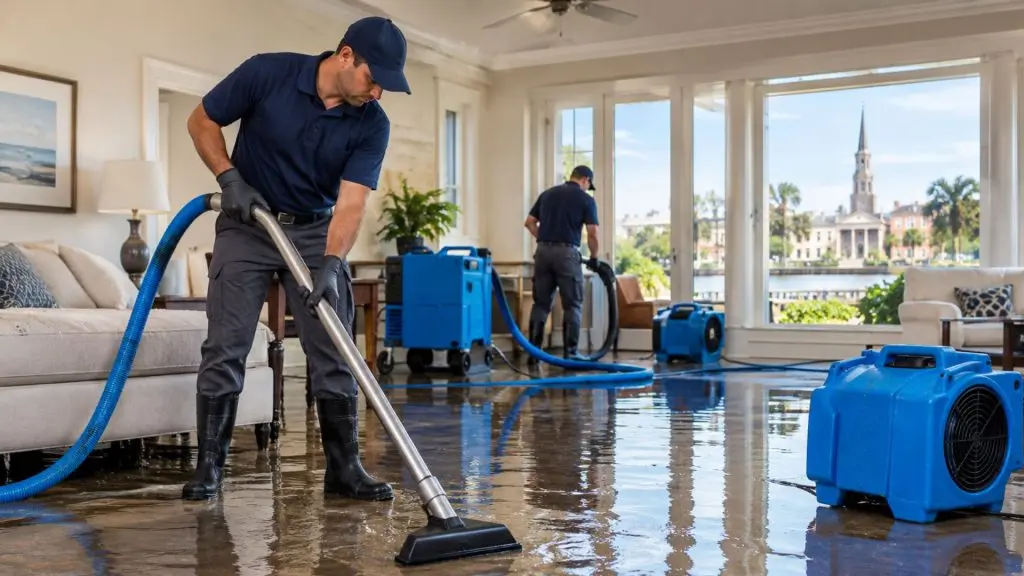
A musty smell after water damage usually signals mold or mildew growth that has started in wet materials. Addressing the odor without also addressing the underlying moisture and mold growth is a temporary fix at best, which is why odor removal and mold removal often go hand in hand.
Sewage and Grease Odors
Odors from sewage backups and heavy food or grease buildup tend to be strong, biologically based, and resistant to standard cleaning products. These situations often follow a sewage backup cleanup or kitchen-related event and need a dedicated deodorization step once the source has been remediated.
Why Store-Bought Sprays and Air Fresheners Don’t Work
Air fresheners and sprays add a new scent on top of the problem rather than eliminating the odor source. They can’t reach odor molecules trapped inside drywall, insulation, or subflooring, and they do nothing to address the bacteria, mold spores, or smoke residue causing the smell in the first place. Once the fragrance fades, the original odor typically comes right back, often stronger after humidity or heat has had time to work on the trapped particles.
How Professional Odor Removal Works
Our odor removal process is built around finding the actual source of the smell, not just masking it. Here’s what that looks like for a Houston home:
1. Inspection and identification: We locate the odor source, whether that’s smoke residue, pet stains, mold, or something else, and determine how far it has spread.
2. Containment and treatment planning: Affected areas are isolated and we build a treatment plan based on the odor type and the materials involved.
3. Neutralization and deep cleaning: We apply odor neutralizers and deep-clean affected surfaces while running air filtration to capture airborne particles.
4. Sanitization and deodorization: Specialized equipment treats the space to break down odor molecules at the source rather than covering them.
5. Final verification: We confirm the space is genuinely odor-free before considering the job complete.
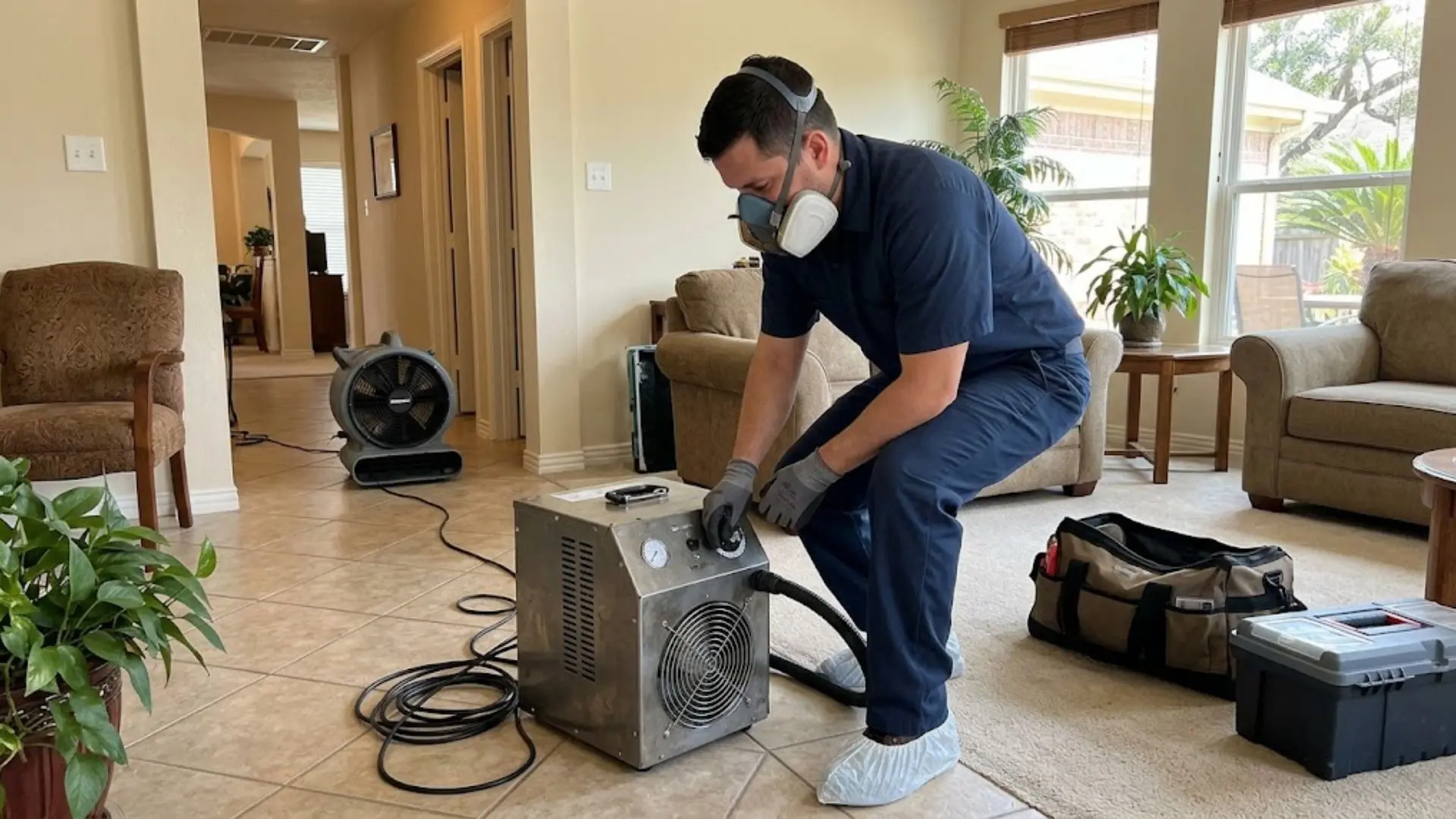
To get results that last, we rely on equipment designed specifically for odor elimination rather than general cleaning products:
- Ozone treatments break down odor-causing molecules
- Hydroxyl generators for odor removal in occupied spaces where ozone isn’t appropriate
- Air scrubbers to continuously filter airborne particles during treatment
- HEPA filtration systems to capture fine particles like smoke residue and mold spores
As an IICRC certified firm, we apply these methods based on the specific odor source and the materials affected, rather than a one-size-fits-all treatment.
Houston’s Humidity Makes Odor Problems Worse
Houston’s Gulf Coast humidity gives odor-causing bacteria and mold more opportunity to thrive in damp or previously wet materials. During the hotter, more humid months, homeowners often notice that an odor problem that seemed minor becomes much more noticeable, since heat and moisture reactivate trapped particles. This is one more reason odor issues connected to water damage or flooding tend to need professional attention rather than a quick surface clean.
When to Call a Professional Odor Removal Team
Certain situations call for professional odor removal rather than continued DIY attempts:
- The smell returns within days after cleaning or airing out the space
- The odor is connected to a recent fire, flood, or sewage backup
- Air fresheners only mask the smell temporarily
- Family members or pets react to the smell with irritation or allergy symptoms
- The odor is noticeable in multiple rooms or through the HVAC system
If any of these sound familiar, it’s a sign the odor source needs professional treatment rather than another round of candles and sprays.
Frequently Asked Questions
How long does professional odor removal take?
Timelines vary based on the odor source and how far it has spread, but most residential odor removal jobs are completed within a few days. Odors tied to fire or sewage damage that involve larger areas may take longer to fully resolve.
Will ozone treatment damage my home or belongings?
Ozone is a proven, widely used method for odor removal, but it’s applied only in unoccupied spaces for a set treatment period. Our team determines whether ozone or hydroxyl treatment is the better fit based on your specific situation.
Can I just replace carpet or paint over the smell instead?
Replacing carpet or repainting can help, but it won’t solve the problem if the odor source is still present in the subfloor, framing, or ductwork. Treating the source first prevents the odor from returning through new materials.
Does homeowners insurance cover odor removal?
It depends on the cause. Odor removal connected to a covered event like fire or water damage may be included as part of that claim, so it’s worth checking with your insurance provider about your specific policy.
Is odor removal necessary after mold remediation is finished?
Often, yes. Mold spores and musty odors can linger in porous materials even after visible mold has been removed, so a dedicated deodorization step helps confirm the space is fully clean.
Getting Your Home Smelling Right Again
Persistent odors are usually a sign that something needs to be addressed at the source, whether that’s smoke residue, pet stains, or moisture from past water damage. A professional odor removal process treats that source directly instead of layering another scent on top of the problem.
If odor removal in your Houston, TX home has become a repeat issue, our IICRC-certified team at Predator Restoration can identify the source and treat it properly the first time. Call us to get started.