
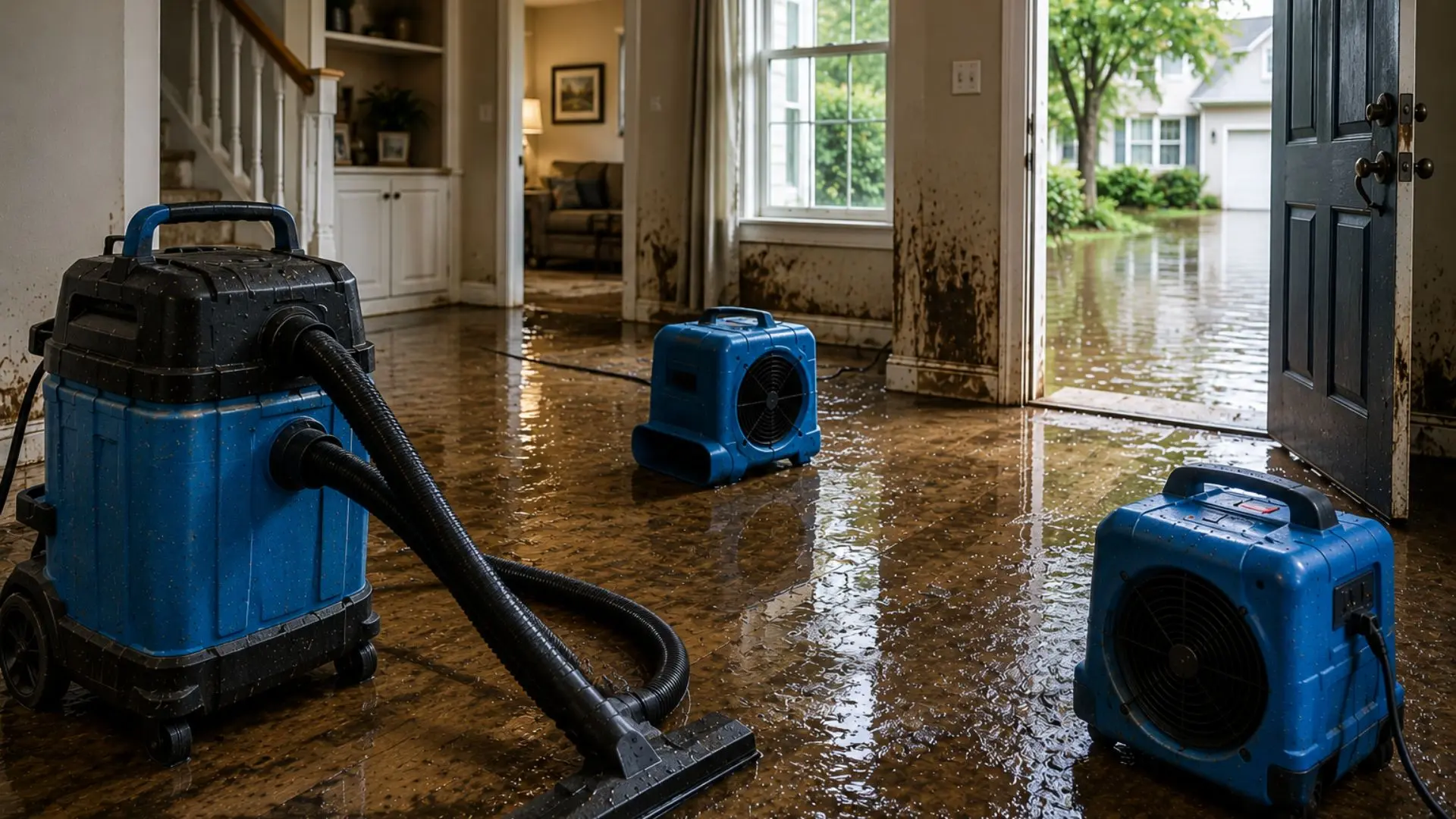
Hurricane season in Houston brings more than wind damage. Storm surge, days of sustained rainfall, and flash flooding can push water into homes faster than most people expect, and once that water sits, the damage compounds by the hour. Emergency water extraction Houston services exist specifically for this window — the hours right after flooding when fast action determines whether a home needs minor repairs or a full structural rebuild.
Why Hurricane Flooding Causes Extensive Water Damage
Not all flooding behaves the same way, and Houston homes typically face three distinct sources of water intrusion during hurricane season. Each one carries its own risks and requires a different level of urgency once the water gets inside.
Storm Surge
Storm surge pushes large volumes of saltwater inland from the Gulf, often flooding homes miles from the coast. Saltwater is more corrosive than rainwater, accelerating damage to metal fixtures, wiring, and wood framing, and it leaves behind salt residue that continues drawing moisture even after the water recedes.
Heavy Rainfall
Houston hurricanes frequently stall over the region, dumping rainfall totals measured in feet rather than inches. Roofs, gutters, and drainage systems built for typical storms get overwhelmed, sending water into attics, through window seals, and around foundations.
Flash Flooding
Houston’s flat terrain and dense urban development limit natural drainage, so flash flooding can rise within a matter of hours. Water backs up from storm drains and bayous, entering homes at ground level and saturating flooring, drywall, and belongings before residents can react.
Timeline of Flood Damage
| Time After Flooding | What Happens |
| 0–24 hours | Water saturates flooring, drywall, and furniture |
| 24–48 hours | Mold growth begins in damp materials |
| 48–72 hours | Wood swells and warps, drywall weakens |
| 3–7 days | Structural materials begin deteriorating |
| 1+ week | Extensive mold colonization, possible structural compromise |
What To Do Immediately After Flooding
The first few hours after floodwater enters a home set the tone for everything that follows, from insurance approval to how much of the structure can be saved. A few clear steps make that window count.
Stay Safe
Avoid entering floodwater until it’s confirmed safe, since it can carry electrical hazards, contaminants, and structural risks that aren’t visible at a glance. Shut off electricity to affected areas if it can be done safely.
Document Damage
Photograph and video every affected room, item, and visible damage before any cleanup begins. This documentation becomes essential for insurance claims and speeds up the approval process.
Contact Insurance
Report the damage to your insurance provider as soon as possible. Many policies have specific timelines for filing flood-related claims, and early reporting helps avoid disputes later.
Call Emergency Water Extraction Professionals
Standing water needs to be removed within hours, not days. Emergency water extraction Houston teams can respond around the clock to begin extraction and drying before secondary damage sets in.
Immediate Homeowner Checklist
| Action | Why It Matters |
| Confirm safety before entering | Avoids electrical and structural hazards |
| Photograph all damage | Supports insurance claims |
| Shut off power if safe | Prevents electrical hazards in wet areas |
| Contact insurance provider | Starts claims process within policy timelines |
| Call water extraction professionals | Limits mold growth and structural damage |
How Emergency Water Extraction Works
Professional extraction follows a defined sequence designed to remove water and moisture before either can cause lasting damage. Here’s what that process typically looks like once technicians arrive on-site.
- Inspection: Technicians assess the extent of water intrusion and identify affected materials.
- Water removal: Industrial pumps and vacuums extract standing water from floors, carpets, and lower-level spaces.
- Moisture detection: Meters and thermal imaging locate residual moisture inside walls, subfloors, and framing.
- Drying: Air movers circulate air across wet surfaces to accelerate evaporation.
- Dehumidification: Industrial dehumidifiers pull moisture from the air to prevent it from resettling into materials.
- Sanitizing: Affected surfaces are treated to eliminate bacteria and contaminants often present in floodwater.
Why Fast Water Extraction Prevents Costly Damage
Speed isn’t just about convenience, it directly determines how much of a home’s structure, flooring, and materials can be saved versus replaced. Three areas show this most clearly.
Mold Prevention
Mold can begin developing within 24 to 48 hours of water exposure. Extracting water and drying materials before that window closes is the single biggest factor in preventing a mold outbreak after flooding.
Structural Protection
Wood framing, subfloors, and drywall absorb water quickly and begin losing structural integrity within days. Fast extraction limits how deep water penetrates these materials, reducing the scope of structural repairs.
Saving Flooring & Drywall
Many flooring types and lower sections of drywall can be saved if water is removed and materials are dried within the first 24 to 48 hours. Delayed response usually means full replacement instead of restoration.
Immediate vs Delayed Water Extraction
| Factor | Immediate Extraction | Delayed Extraction |
| Mold risk | Low, controlled | High, often unavoidable |
| Structural materials | Often salvageable | Frequently require replacement |
| Flooring and drywall | Higher chance of restoration | Usually needs full removal |
| Repair timeline | Days to weeks | Weeks to months |
| Overall cost | Lower | Significantly higher |
Why Houston Homeowners Trust Predator Restoration
Predator Restoration provides 24/7 emergency water extraction Houston homeowners can call on during hurricane season, when response time matters most. The team uses industrial-grade extraction and drying equipment, works directly with insurance providers on documentation, and follows a structured process from initial inspection through full sanitization. For homes across Houston dealing with storm surge, flash flooding, or heavy rainfall damage, that combination of speed and thoroughness is what limits a flood from turning into a full reconstruction project.
FAQs
How soon should water extraction start after flooding?
Water extraction should begin as soon as it’s safe to access the property, ideally within hours. Mold can start forming within 24 to 48 hours of water exposure, so delays significantly increase damage and repair costs.
Is floodwater from hurricanes considered contaminated?
Yes. Floodwater from storm surge or flash flooding typically carries bacteria, chemicals, and debris, which is why sanitizing affected areas is a standard part of the extraction process, not an optional step.
Will my homeowners insurance cover hurricane flooding?
Standard homeowners insurance often excludes flood damage, which typically requires separate flood insurance. Coverage details vary by policy, so it’s important to review your specific plan or speak with your provider directly.
How long does emergency water extraction take?
Initial water removal usually takes a few hours to a day, while full drying and dehumidification can take three to five days depending on how much water was absorbed into structural materials.
Can I stay in my home during water extraction?
It depends on the extent of flooding and any safety hazards like electrical damage or contamination. A restoration technician can assess the property and advise whether it’s safe to remain during the process.
Facing Flood Damage in Houston Right Now?
Every hour of standing water increases the risk of mold, structural damage, and lost flooring or drywall. If your home has taken on water from hurricane flooding, storm surge, or flash flooding, don’t wait to see how it dries on its own.
Predator Restoration offers 24/7 emergency water extraction Houston residents can count on, with industrial equipment, certified technicians, and direct insurance support from inspection through full drying. Call Predator Restoration now to get extraction started before the damage spreads further into your home’s structure.