
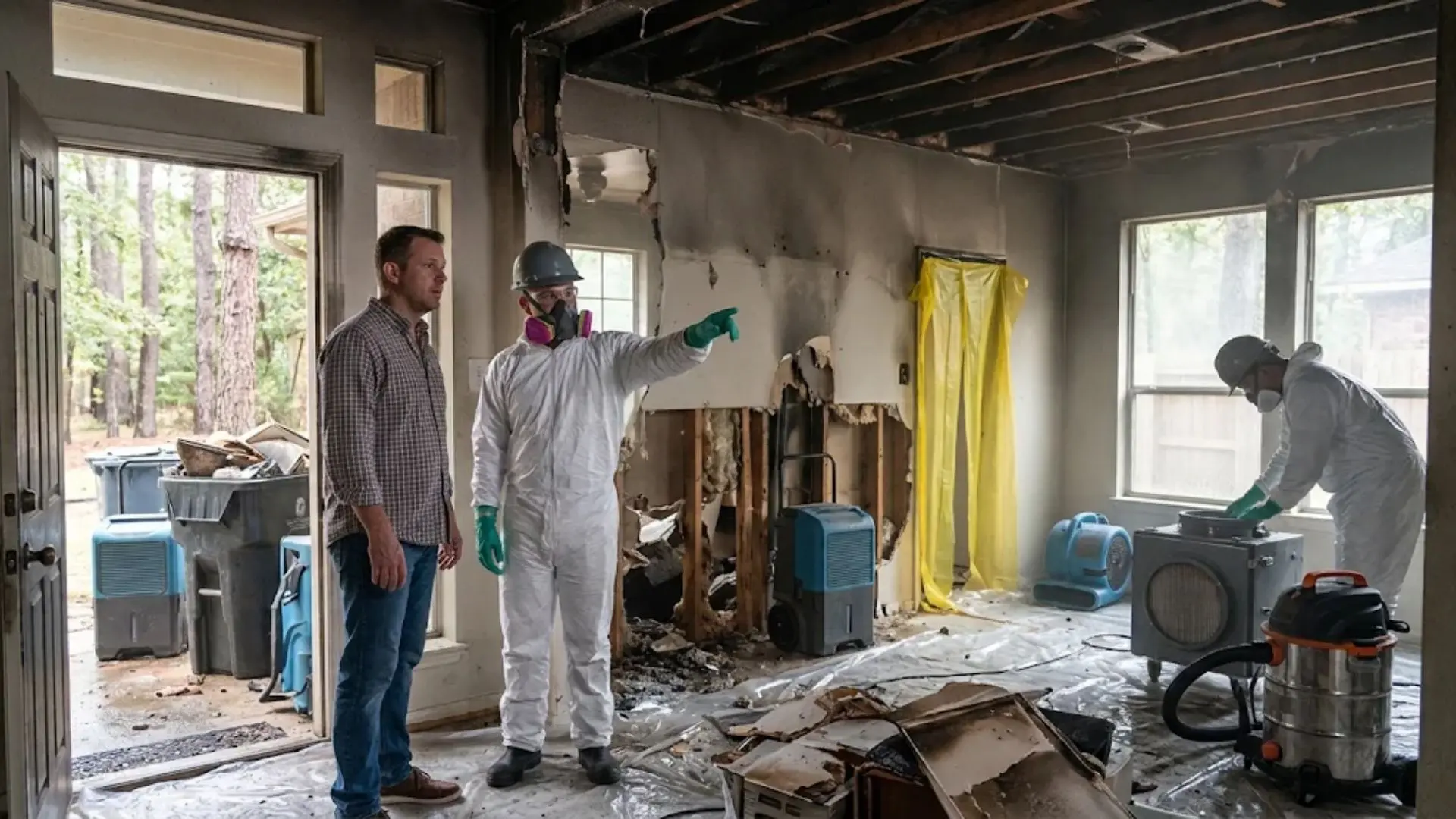
A grease fire that starts on the stovetop can scorch a kitchen in minutes, but the smoke and soot it leaves behind often spread far beyond the room where it started. Homeowners in The Woodlands who have just been through a fire are usually dealing with more than char marks. Walls, carpet, ductwork, and even closets on the other side of the house can carry smoke odor and soot residue long after the flames are out.
Fire damage restoration in The Woodlands is the process of cleaning, repairing, and rebuilding a home after a fire so it is safe and livable again. Because heat, smoke, and the water used to put the fire out each affect a home differently, the work usually involves several stages rather than a single cleanup visit.
This article walks through what the restoration process typically looks like, the types of damage a fire leaves behind, and what homeowners in The Woodlands should do in the hours and days after a fire. If your home has recently been affected, understanding these steps can help you know what questions to ask as you work with a restoration company.
What Happens to a Home During a Fire
A house fire causes damage in three overlapping ways: direct heat and flame, smoke and soot, and water from firefighting efforts. Each one needs a different type of attention during restoration.
Flames char wood, melt plastics, and can compromise framing, drywall, and roofing in the areas closest to the fire. Smoke travels on air currents and HVAC systems, so soot and odor can settle in rooms that never saw flame at all. Meanwhile, water from hoses or sprinkler systems soaks into flooring, insulation, and subfloors, creating a secondary water damage problem that has to be addressed before repairs can begin.
This is why a fire-damaged home almost always needs restoration services that go beyond basic cleaning. Repairing the visible damage without addressing hidden moisture or lingering smoke residue tends to leave problems that surface weeks later.
The Fire Damage Restoration Process, Step by Step
Most fire damage restoration projects follow a similar sequence, though the scope depends on how much of the home was affected.
1. Emergency Board-Up and Water Extraction
The first priority after a fire is securing the home and removing standing water. Broken windows, damaged doors, and holes in the roof from firefighting efforts leave a home exposed to weather and intruders, so boarding them up is typically one of the earliest steps. At the same time, any water used to fight the fire needs to be extracted quickly to limit secondary damage like warping or mold growth.
2. Damage Assessment and Documentation
Before cleanup begins, a thorough walkthrough identifies which materials can be cleaned and which need to be replaced. This assessment also creates documentation, including photos and written notes, that homeowners can use when filing an insurance claim.
3. Smoke and Soot Cleanup
Soot is acidic and can continue to damage surfaces like metal, grout, and painted walls if it is not removed promptly. Cleanup typically involves specialized cleaning agents and techniques suited to the surface, since soot on fabric requires a different approach than soot on tile or wood trim.
4. Odor Removal
Smoke odor settles into porous materials such as drywall, insulation, and upholstery. Depending on severity, odor removal may involve thermal fogging, air scrubbing, or ozone treatment in addition to standard cleaning, since surface cleaning alone often is not enough to fully clear the smell.
5. Structural Repairs and Reconstruction
Once the home is clean and dry, repairs can begin on anything that was charred, warped, or otherwise structurally affected. This can range from patching drywall and repainting to replacing framing, flooring, or roofing sections, depending on how extensive the fire damage was.
Common Types of Fire Damage Found in Area Homes
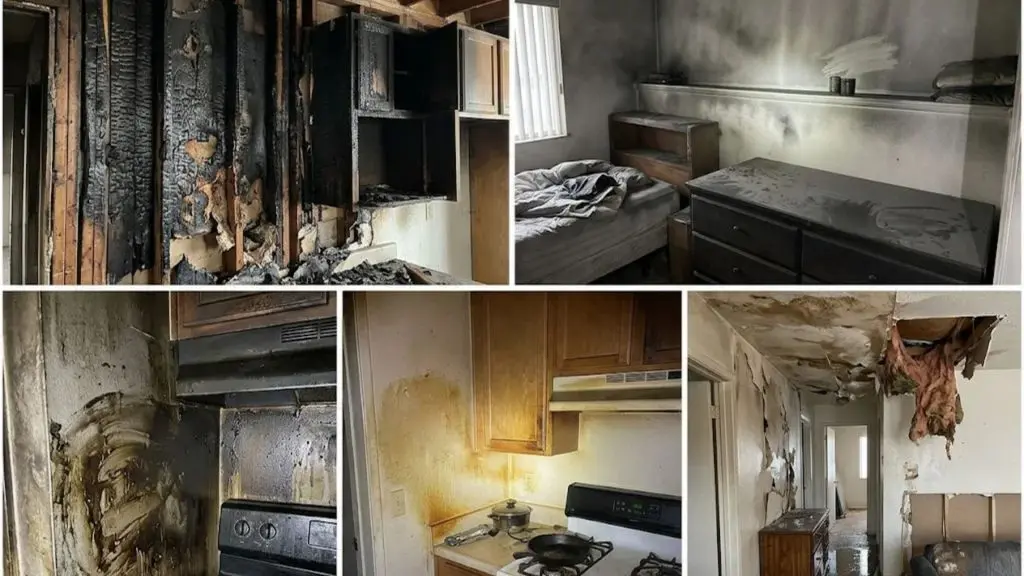
Fire damage does not look the same in every room, and the type of residue left behind affects how it is cleaned.
- Char and heat damage: Charring is most severe near the point of origin and can compromise wood framing, cabinetry, and roofing materials.
- Dry smoke residue: Common with fast, hot-burning fires, this leaves a powdery soot that is easier to clean but spreads widely through the air.
- Wet smoke residue: Produced by smoldering, lower-heat fires, this leaves a sticky, smeared residue with a stronger odor that is more difficult to remove.
- Protein residue: Often from kitchen fires involving food, this is a nearly invisible residue that discolors surfaces and carries a strong odor.
- Water damage from firefighting: Hose water and sprinkler discharge can saturate flooring, drywall, and insulation even in rooms the fire never reached.
In a wooded, humid area like The Woodlands, the water damage that follows a fire deserves particular attention. Moisture trapped in walls or subflooring during the warmer months can lead to mold growth within a day or two if it is not dried out properly, which is one reason water extraction and structural drying are treated as urgent steps rather than an afterthought.
What to Do (and Avoid) After a Fire
The hours right after a fire matter, and a few common mistakes can make the damage worse or create safety risks.
Do:
- Wait for the fire department to clear the home as safe to enter before going back inside.
- Contact your insurance provider to begin the claims process and ask what documentation they require.
- Photograph visible damage before anything is moved or cleaned, if it is safe to do so.
- Keep receipts for any temporary lodging or expenses related to the fire.
Avoid:
- Turning on electrical switches, appliances, or HVAC systems until an electrician or restoration professional confirms it is safe.
- Attempting to clean soot with household cleaners, which can smear residue deeper into fabric and painted surfaces.
- Eating food that was exposed to heat, smoke, or firefighting chemicals.
- Leaving windows, doors, or roof openings unsecured, which invites weather damage and theft.
Insurance Considerations After a Fire
Most homeowners insurance policies cover fire damage, but coverage details, deductibles, and documentation requirements vary by policy. It is worth asking your insurance company early on what records they need, whether they require an inspection before cleanup begins, and how they handle temporary housing if the home is not livable during repairs. Keeping a written log of calls, inspections, and repair timelines can make the claims process smoother.
When to Call a Professional Restoration Company
Even a small, contained fire often leaves smoke damage that spreads beyond the room it started in, which is why most homeowners benefit from a professional assessment rather than attempting cleanup alone. A restoration company can evaluate hidden moisture, structural safety, and air quality in ways that are difficult to check without the right equipment.
We handle fire damage restoration for homes in The Woodlands, from the initial water extraction and board-up through smoke and soot cleanup, odor removal, and reconstruction. Because fire and water damage are often connected, we also work with homeowners who need water damage mitigation or mold inspection as part of the same recovery process.
Frequently Asked Questions
How Long Does Fire Damage Restoration Take?
Timelines vary widely based on the size of the fire and how much reconstruction is needed. A single room with light smoke damage might be restored in a few days, while a home needing structural rebuilding can take several weeks or longer once repairs, inspections, and drying time are factored in.
Can Smoke Smell Be Completely Removed From a Home?
In most cases, yes, though it depends on how deeply the odor has settled into materials like drywall, insulation, and carpet padding. Techniques such as air scrubbing, thermal fogging, and replacing heavily affected porous materials are often needed alongside standard cleaning to fully clear persistent odors.
Is It Safe to Stay in the Home During Restoration?
This depends on the extent of the damage and whether utilities like electricity and HVAC are safe to use. Homes with significant structural, electrical, or air quality concerns usually require temporary relocation until those issues are resolved.
Do I Need to File an Insurance Claim Before Cleanup Starts?
It is best to contact your insurance provider as soon as possible, since some policies require documentation or an adjuster visit before certain repairs begin. Starting the claims conversation early can help avoid delays once restoration work is ready to proceed.
What Is the Difference Between Fire Damage and Smoke Damage?
Fire damage refers to the direct effects of flames and heat, such as charring and structural harm, while smoke damage refers to residue and odor that spread through the air, often reaching rooms the fire never touched. Both typically need to be addressed for a full recovery.
Key Takeaways on Fire Damage Restoration in The Woodlands, TX
Recovering from a house fire usually involves more than patching up charred walls. Smoke residue, lingering odor, and water from firefighting efforts all need attention, often in rooms that look untouched at first glance. Acting quickly on water extraction and securing the home helps limit damage from spreading while the rest of the restoration process gets underway.
If your home in The Woodlands has recently experienced a fire, our fire damage restoration in The Woodlands team can walk the property with you, document the damage for your insurance claim, and handle everything from smoke damage cleanup and odor removal to water extraction and full reconstruction. Contact us today to get your home’s restoration process started.