
A sewage backup rarely gives much warning. One moment a toilet or floor drain is working fine, and the next, contaminated water is spreading across the floor of your Houston home. Beyond the mess, sewage carries real health hazards that get worse the longer the water sits.
This guide covers what causes sewage backups in Houston homes, the health risks involved, and why response time matters so much once contamination is discovered. We’ll also walk through our sewage backup cleanup process, insurance considerations, and the warning signs that mean it’s time to call a professional.
If you’re dealing with a sewage backup cleanup in your Houston, TX home right now, Predator Restoration is available around the clock to help you get the problem contained safely.
What Causes a Sewage Backup in a Houston Home
Sewage backups happen for a handful of common reasons, and Houston’s climate and infrastructure make several of them more likely here than in drier parts of the country. Heavy rainfall and tropical weather during hurricane season can overwhelm municipal sewer lines, pushing wastewater back into homes through the lowest drains or floor connections.
Other common causes include:
- Tree root intrusion into aging sewer laterals
- Grease, wipes, or other debris clogging interior plumbing
- Aging or damaged pipes that collapse or crack underground
- Municipal sewer line blockages during heavy storm events
- Septic system failure or overflow
Regardless of the cause, the result is the same: contaminated water inside a living space that needs to be addressed quickly and correctly.
The Health Risks of Sewage Exposure
Sewage contains harmful bacteria, viruses, and parasites that can make you sick through direct contact, inhalation, or even indirect exposure to contaminated surfaces. This is what restoration professionals classify as “black water,” the most contaminated category of water damage, and it’s treated very differently from a clean water leak.
Exposure to raw sewage can lead to gastrointestinal illness, skin and eye irritation, and respiratory issues, particularly for children, older adults, pets, and anyone with a compromised immune system. Because the contamination isn’t always visible once the standing water is gone, sewage backups are considered a biohazard situation that calls for professional remediation rather than a standard cleanup.
Why DIY Cleanup Isn’t Recommended
Mopping up a sewage backup with household cleaning supplies doesn’t remove the bacteria and pathogens that have already soaked into flooring, drywall, and subfloor materials. Porous materials that have been in contact with sewage typically need to be removed and replaced rather than cleaned, which is one of the reasons professional assessment matters before any repairs begin.
Why Response Time Matters
The longer contaminated water sits, the more it spreads into flooring, baseboards, and wall cavities, and the greater the risk that secondary damage sets in. Houston’s Gulf Coast humidity gives mold an easy head start once materials stay wet, which is one more reason a fast, professional response matters after any sewage event.
Quick containment also limits how far the contamination travels through a home, which can reduce the amount of material that ultimately needs to be removed and rebuilt. That’s why we treat sewage backup calls as emergencies and offer 24/7 availability for Houston homeowners.
Our Sewage Backup Cleanup Process
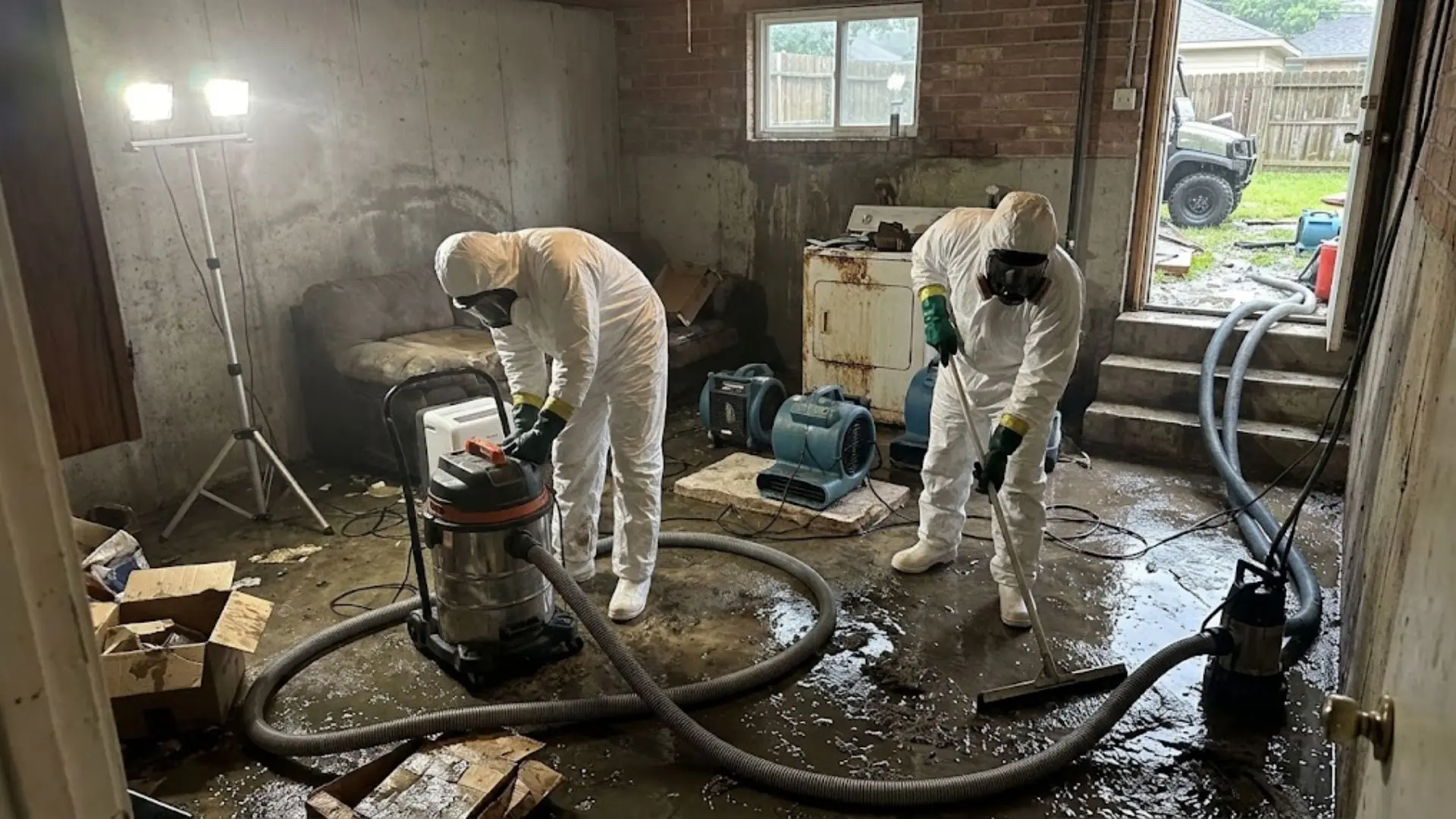
When our team arrives at a Houston home dealing with a sewage backup, we follow a structured process designed to protect your health and your property:
1. Assessment and source identification: We locate where the backup originated and evaluate how far the contamination has spread.
2. Containment: Affected areas are isolated to keep contaminated water and airborne pathogens from reaching unaffected parts of the home.
3. Sewage removal: Industrial pumps and vacuums extract standing wastewater and solid waste.
4. Disinfection: Hospital-grade disinfectants are applied to affected surfaces to address bacteria and pathogens left behind.
5. Drying and dehumidification: Commercial air movers and dehumidifiers dry the structure and help prevent mold growth from taking hold.
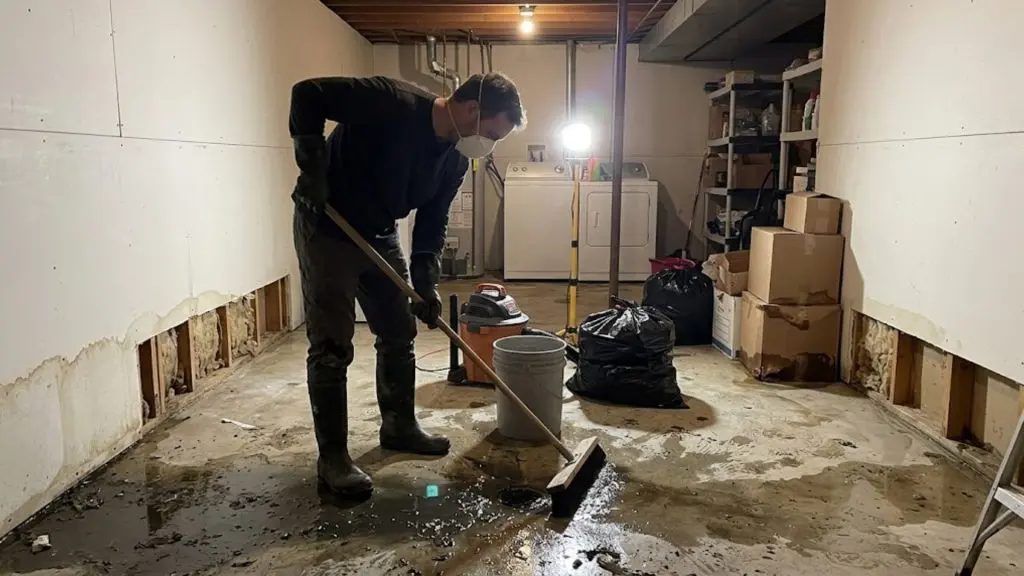
6. Repairs and reconstruction: Once the property is dry and clean, we remove materials that can’t be saved, such as damaged drywall, flooring, and subfloor, and rebuild them as part of our rebuild and reconstruction services.
Most sewage cleanup jobs take one to three days, depending on how far the contamination has spread. Larger or more complex jobs can take longer. Once the structure is fully dry, we often recommend a follow-up odor removal service, since sewage odors can linger in porous materials even after the visible contamination is gone.
And if moisture sat for an extended period before cleanup began, it’s worth having the space inspected through our mold removal services.
Insurance Considerations for Sewage Backup Cleanup
Homeowners insurance policies vary widely in how they handle sewage backups, and coverage often depends on the specific cause of the backup and whether a sewer backup endorsement was added to the policy. Some policies cover backups caused by plumbing failures inside the home but exclude backups that originate from municipal sewer lines, or vice versa.
Because these details can be confusing, we offer insurance assistance and work with all major insurers to help simplify the claims process for Houston homeowners dealing with a sewage backup.
When to Call a Professional Restoration Team
Not every plumbing issue requires a full remediation team, but certain signs point to a situation that’s beyond a simple cleanup:
- Standing water that has been present for more than a few hours
- Water backing up from a toilet, floor drain, or multiple fixtures at once
- A persistent sewage smell after the visible water is gone
- Contamination that has reached carpet, drywall, or furniture
- Any backup affecting a finished basement or living space
If you notice any of these signs in your Houston home, it’s time to bring in a professional team rather than attempting to manage the cleanup on your own.
Frequently Asked Questions
How long does sewage backup cleanup take?
Most sewage cleanup jobs take one to three days, depending on how much contamination occurred and how many materials need to be removed. Larger backups affecting multiple rooms or requiring extensive reconstruction can take longer to fully resolve.
Is sewage backup covered by homeowners insurance?
Coverage depends on your specific policy and the cause of the backup. Many standard policies exclude sewer backups unless you’ve added a specific endorsement, so it’s worth reviewing your policy or asking your provider directly.
Can I clean up a small sewage backup myself?
We don’t recommend it, even for small backups, since sewage contains bacteria and pathogens that aren’t always visible and can remain in porous materials after a surface-level cleanup. Professional disinfection reduces the health risk to your household.
What’s the difference between water damage and sewage damage?
Sewage damage involves contaminated “black water” that carries health risks, while clean water damage from a burst pipe does not carry the same biohazard concerns. This distinction changes what needs to be removed versus what can simply be dried.
Will I need to replace flooring or drywall after a sewage backup?
Porous materials that have absorbed contaminated water usually need to be removed rather than cleaned. This can include carpet, carpet padding, drywall, and insulation, depending on how long the material was exposed.
Acting Quickly Makes the Difference
A sewage backup is stressful, but a fast, professional response limits the health risks and keeps the cleanup from becoming a bigger project than it needs to be. Understanding the health risks and expected timeline helps Houston homeowners make informed decisions when a backup happens.
If your home in Houston, TX needs sewage backup cleanup, our IICRC-certified team at Predator Restoration is available 24/7 to assess the damage, contain the contamination, and get your home back to a safe, livable condition. Call us when you need help.